हिमनदी
LUCERNE (Switzerland), Kartik 6.
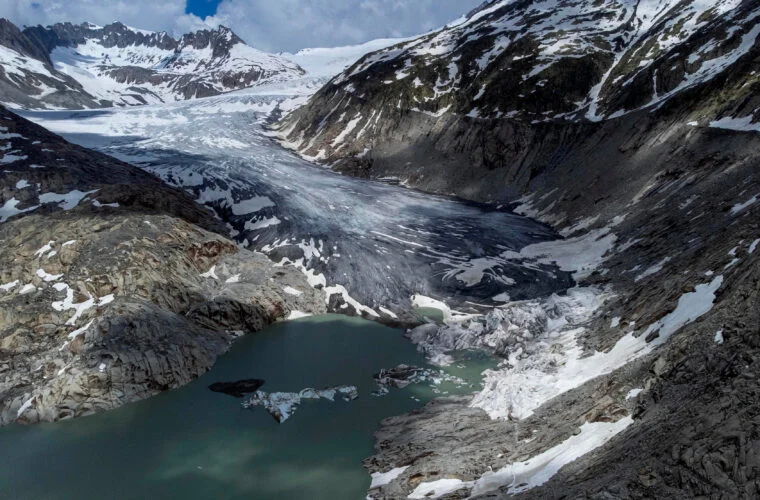
As Switzerland’s glaciers are melting rapidly due to climate change, ancient objects, historical materials, and evidence of environmental changes that were buried under the ice for years have begun to surface. Incorporating such items, the Glacier Garden in Lucerne has organized an exhibition named “Treasury of Ice.”
The exhibition features items such as a bow used by ancient hunters, an empty mayonnaise tube, a discarded wine bottle, a climber’s broken helmet, and Roman-era statues. A cow’s skull, shoes, an old Swiss Army pocketknife, and skiing equipment are also included in the exhibition.
Swiss glaciologists have stated that the country lost 5.5 percent of its total glacier area this year. This marks the second-largest decline since records began. Andreas Burga, director of the Glacier Garden, explained that the exhibition was organized to publicly display the materials and evidence of environmental history safely preserved there before they disappear as glaciers melt rapidly.
“Glaciers are disappearing very rapidly right now. Before they vanish completely, we want to show people the important and interesting records we are about to lose,” he said.
The exhibition features not only physical objects but also videos of Swiss glaciers, data showing the annual melting rate, and models explaining how glaciers flow. Burga noted that some of the items might even be litter lost or discarded by humans. While it is uncertain how those items reached there, he said the exhibition is useful for understanding what kinds of materials emerge when glaciers melt.
The items on display are arranged on top of white boxes typically used for collecting materials from the mountains and transporting them to laboratories, creating a visual effect reminiscent of materials stored in a warehouse. A cylinder of ice extracted from a glacier is also kept on display, which appears in a melting state, serving as a reminder of the rapid changes occurring in nature.
Glaciers have preserved not only solid objects but also microscopic evidence of environmental history. The exhibition presents facts showing that pollen, greenhouse gases, and microscopic particles of radioactive material generated from mid-20th-century nuclear tests have remained frozen in the ice.
Similarly, it shows that black smoke particles and charcoal residues from a forest fire caused by drought and extraordinary heat about 500 years ago, in the mid-16th century, are also preserved in the ice. This evidence helps in understanding that high temperatures and extreme weather conditions existed in the past as well.
No human remains are kept in the exhibition. However, bodies of mountaineers who went missing decades ago are often found as glaciers melt. Last August, the bodies of two Belgian mountaineers who went missing decades ago were found near the Trift Glacier, south of Lucerne. In 2015, the remains of two Japanese climbers who went missing in 1970 were found near the famous Matterhorn mountain.
The exhibition demonstrates that the conservation and study of such materials are essential, as the objects and evidence preserved in glaciers provide vital information about past human activities, natural conditions, and environmental changes. This exhibition will run until August 22.
— RSS/Unified Nepal