Honoured for contributions to international law and human rights, award to be presented on December 10
OSLO, October 9
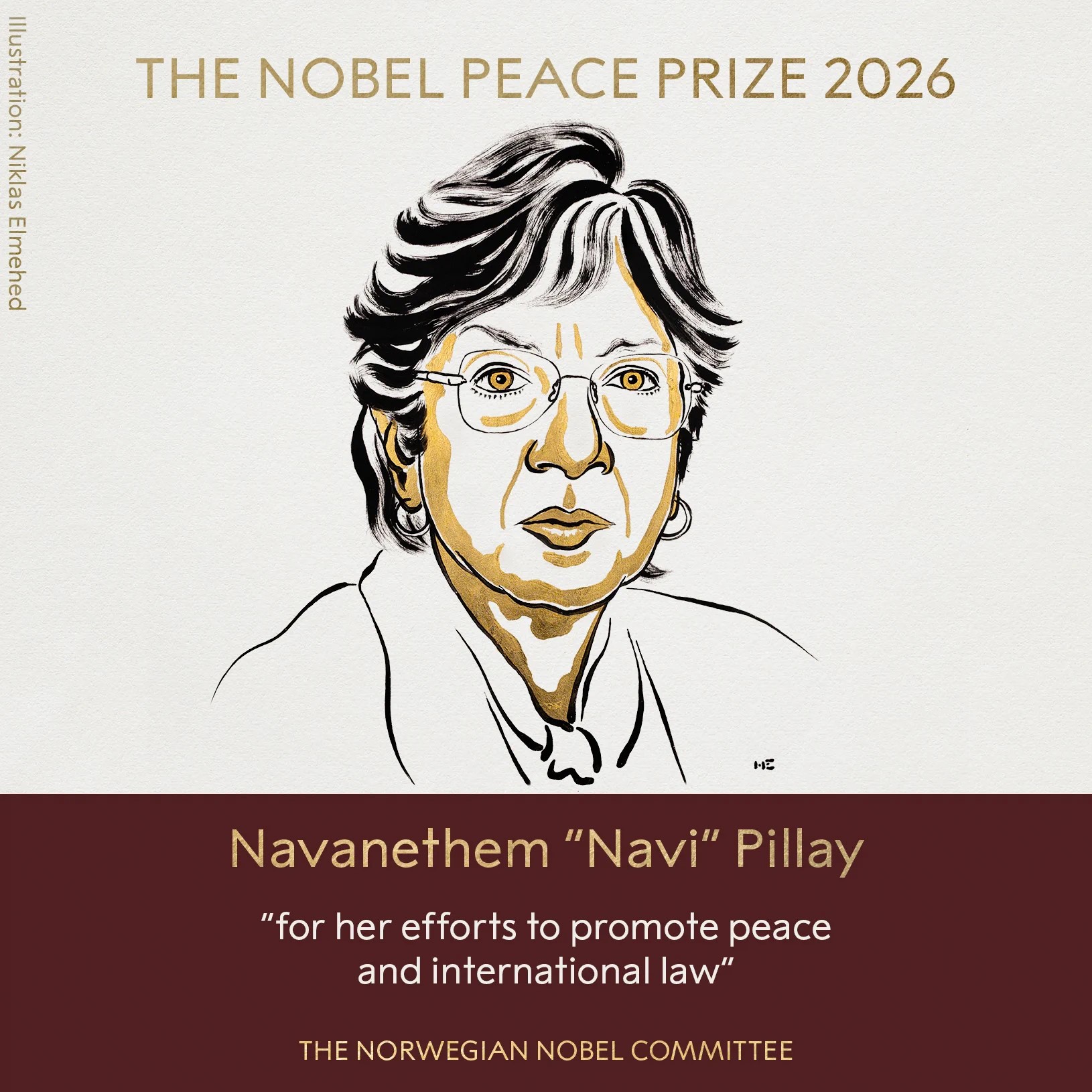
South African jurist Navanethem “Navi” Pillay has been awarded the 2026 Nobel Peace Prize for her contributions to international law, human rights and the promotion of peace, the Norwegian Nobel Committee announced on Friday.
The committee praised Pillay for her role in holding states and national leaders accountable and bringing hope to victims of violence and conflict. It also highlighted her distinguished career defending international legal principles and advancing justice for victims of serious crimes.
Pillay’s career began amid South Africa’s struggle against apartheid. She defended people who opposed the system of racial segregation before moving into international justice. She subsequently served as the United Nations High Commissioner for Human Rights from 2008 to 2014.
She also served as a judge at the International Criminal Tribunal for Rwanda and later became its president. In 1998, she was among the judges involved in the landmark conviction of former Rwandan mayor Jean-Paul Akayesu. The ruling helped establish that rape could constitute genocide when committed with the intent to destroy a protected group.
Pillay also chaired a United Nations commission of inquiry on the Occupied Palestinian Territory, including East Jerusalem, and Israel. Her career has highlighted the importance of international accountability for war crimes, crimes against humanity and genocide.
Her award comes amid continuing international conflicts and renewed debate over the enforcement of international law. Her selection underscores the role of justice, accountability and the rule of law in protecting human rights and building lasting peace.
The Norwegian Nobel Committee received 287 nominations for the 2026 Peace Prize, comprising 208 individuals and 79 organisations. The prize carries an award of 12 million Swedish kronor.
Pillay will receive the award at a ceremony in Oslo on December 10, the anniversary of the death of Alfred Nobel, the Swedish industrialist who established the Nobel Prizes.
Her selection highlights the importance of international justice in efforts to prevent violence, protect human dignity and ensure accountability for serious violations of international law.