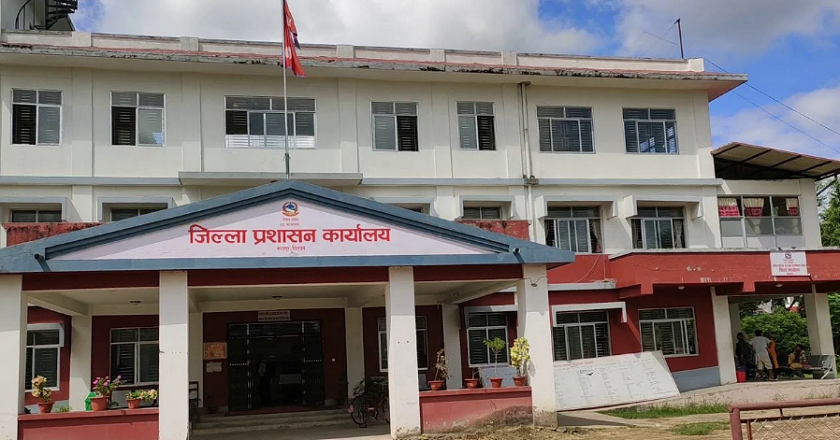
जिल्ला प्रशासन कार्यालय
CHITWAN, Nov 2.
The District Administration Office in Chitwan has directed operators of fish farms engaged in prohibited Maur (African catfish) fish farming to destroy the fish immediately.
The directive was issued after it was found that prohibited fish were being raised and distributed in various parts of the district, and that rotting meat and putrid eggs were being used as fish feed.
An inspection team led by Chief District Officer (CDO) Ganesh Aryal recently inspected several fish farms in Bharatpur Metropolitan City. Assistant Chief District Officer Ishwori Prasad Sharma stated that during the inspection, three farms were found to be illegally raising prohibited Maur fish.
According to Sharma, rotting meat and decomposed eggs were also discovered being used as feed in some of the fish ponds. The administration has instructed the concerned farm owners to immediately destroy the prohibited fish, halt the use of such feed, and clean the ponds and surrounding areas.
CDO Aryal noted that despite a warning issued during monitoring in Bhadra (August/September) not to engage in prohibited fish farming, the instructions were ignored, making the immediate destruction order necessary. He warned that strict legal action would be taken against anyone found raising or distributing prohibited fish.
Prabhat Nyaupane, head of the Livestock Service Office in Bharatpur, stated that the directive was issued after multiple warnings failed to stop Maur fish farming. He explained that waste and decomposed poultry products were being utilized as feed in the ponds, and hatcheries supplying such materials have also been cautioned.
Nyaupane warned that if Maur fish escape into natural water bodies, they could harm other aquatic life and indigenous fish species, threatening local fish populations and negatively impacting the biodiversity of natural water resources.
The administration has urged all fish entrepreneurs in the district to refrain from raising and distributing Maur fish, and requested general consumers not to purchase them.
According to the Livestock Service Office, fish farming is conducted across approximately 1,000 hectares in Chitwan, with Madi Municipality designated as a “Fish Zone” under the National Agriculture Modernization Program.
— RSS