भोजपुरका अर्जुन जोगी
BHOJPUR, Nov 6 :
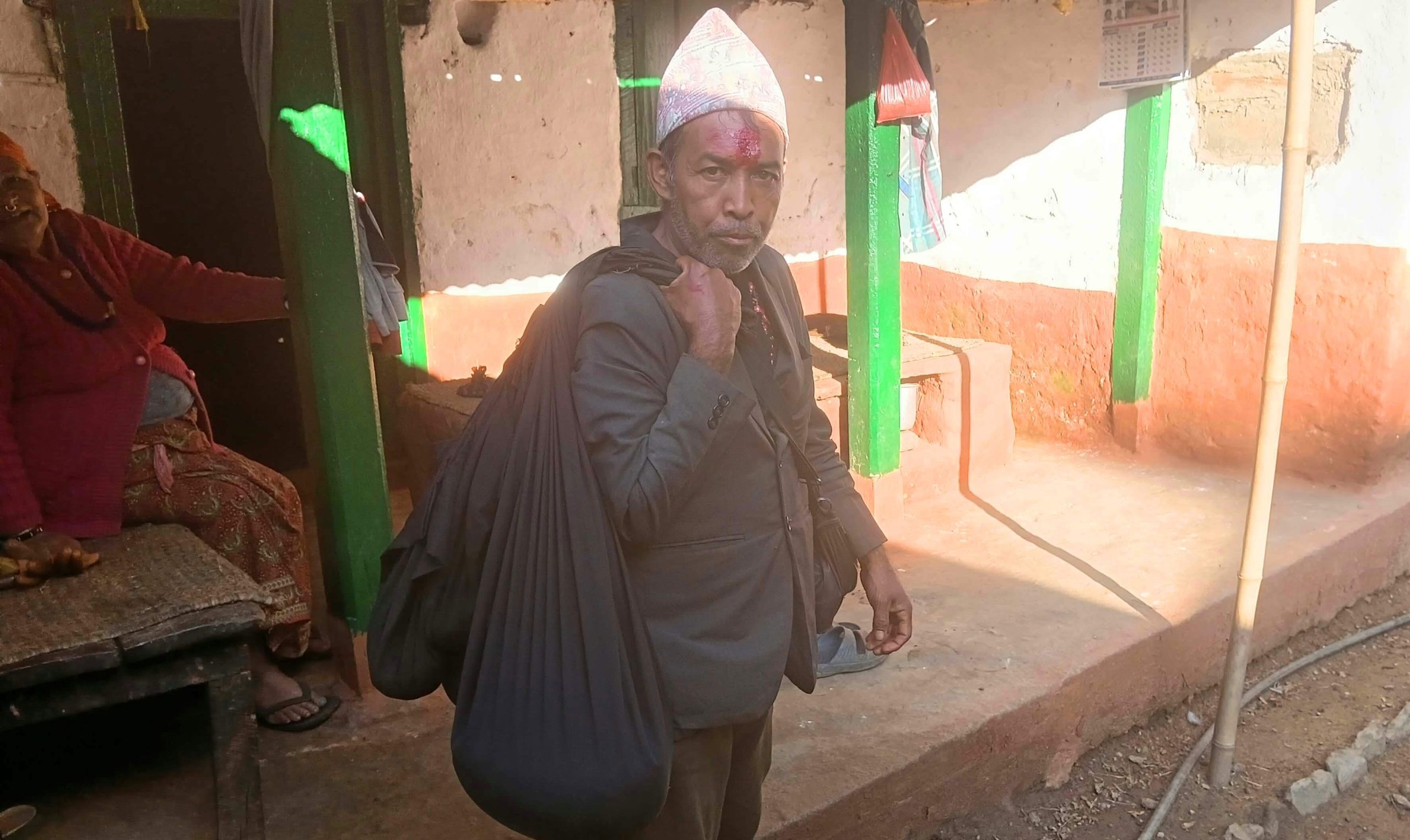
As the age-old traditional profession of performing ‘Pheri’ is on the verge of extinction, Arjun Jogi of Bhojpur has taken the initiative to preserve it.
With the advent of modern lifestyles and a changing social environment, attraction towards traditional professions has declined, prompting Jogi to single-handedly continue his ancestral occupation.
Residing in Yangpang, Arun Rural Municipality-1, Bhojpur, Jogi has been traveling from village to village during the night in the months of Kartik, Chaitra, and Shrawan for the past two decades to perform Pheri. He shared that he spends about 20 to 25 days a month wandering through settlements performing the ritual. Traditionally, it is religiously believed that the Pheri brings peace, prosperity, and family welfare to the village. The practice involves the Pheri performer visiting homes at night, chanting mantras according to traditional rituals. Locals hold deep religious faith and cultural attachment to this tradition.
Upon visiting villages, locals traditionally offer rice, paddy, maize, millet, cash, and other food grains to the performer. This practice of offering provisions based on one’s capacity helps sustain the livelihood of the Pheri performer, while maintaining traditional religious and cultural bonds within rural communities.
The profession of Pheri, deeply rooted in local tradition and culture, was once widely practiced by many. Jogi noted that while 18 to 20 households in Yangpang used to practice this profession in the past, it has now dwindled down to just two individuals. He expressed that he is making continuous efforts to preserve this generational occupation, safeguard local indigenous culture and traditions, and pass them down to the new generation.
He remarked that as the younger generation drifts away from traditional professions over time, the Pheri tradition is facing a serious threat of disappearance. Once a widespread practice in villages, it is now sustained by only a handful of individuals. He emphasized the urgent need to instill an understanding of its cultural importance in the younger generation to protect traditional occupations and heritage.
RSS