अकबरे खुर्सानी
Ilam, November 1 (Kartik 15)
Commercial Akabare chilli (Acuity chilli) farmers in Ilam are deeply worried as their chilli plants have begun dying right during the peak production season.
Pradip Rai, a farmer from Mangsebung Rural Municipality-6, shared that his plants are experiencing a sudden yellowing and dying phenomenon.
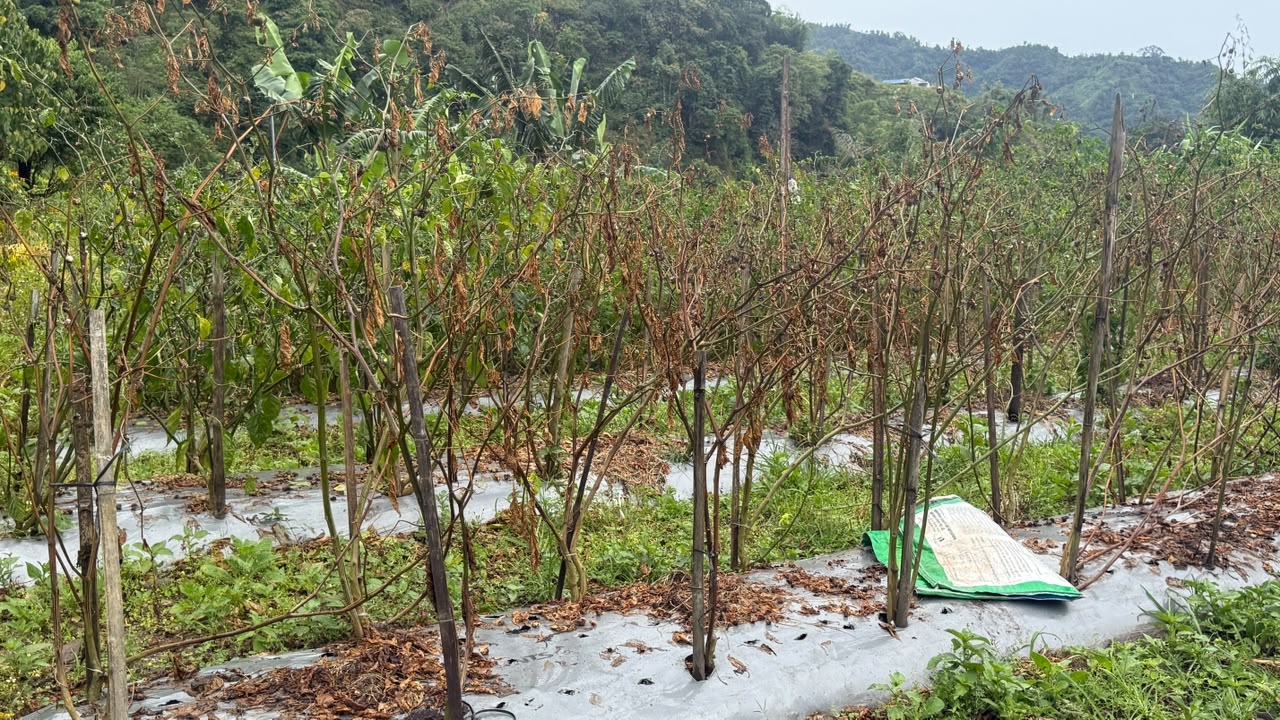
He noted that just as the Akabare chillies began bearing fruit, the leaves turned yellow, branches started drying up, and entire plants withered away.
Having cultivated Akabare chillies commercially for the past two years, Rai had earned NPR 350,000 from the crop last year and expanded his farming this year in anticipation of higher returns.
This year, Rai planted 1,800 Akabare saplings across two ropanis of land. However, with the plants dying off abruptly, he is deeply concerned about losing his entire investment.
“I expanded Akabare chilli farming this year to increase production,” he said, “but as the plants grew and started bearing fruit, half of the fruits began to scorch, turn black, and rot, ruining all my investments.”
Other farmers engaged in commercial farming are facing similar plights. According to another farmer, Jiwan Rai, plants are suffering from blight, insect infestations, yellowing, and rotting issues. “Hoping for good income from Akabare chillies, I planted 2,000 saplings on land previously used for cereal crops,” he said.
“However, with the outbreak of diseases just as the fruiting season arrived, most of the plants were destroyed before we could harvest anything. With both my hard work and investment wasted, I am now worried about what to do next.”
Another farmer, Kalpana Rai, expressed distress over the outbreak of blight, pest infestations, and plant-withering diseases just as the chillies were ready for picking and harvesting.
She noted that within a month of the disease infection, the entire chilli field was destroyed, wiping out a year’s worth of hard work. “This year, the disease outbreak on the chillies has surged suddenly,” she said.
“The entire fruiting chilli orchard has been wiped out, and all our labor has gone in vain. I am now starting to cultivate alternative crops.”
The Akabare chillies produced here are supplied to local markets as well as the Damak market in Jhapa. Local traders typically purchase the produce right from the orchards at NPR 200 to 250 per kilogram.
In recent times, farmers in Ilam have shown a growing attraction toward the commercial cultivation of Akabare chillies as an alternative to traditional staple food crops, driven by the lucrative returns offered by the cash crop.
RSS