पूर्वराष्ट्रपति विद्यादेवी भण्डारी
Kathmandu, October 24:
Former President Bidya Devi Bhandari has urged the global community to take Nepal’s demands for climate justice seriously, noting that recent unimaginable natural disasters in the country have once again highlighted the severe impacts of climate change.
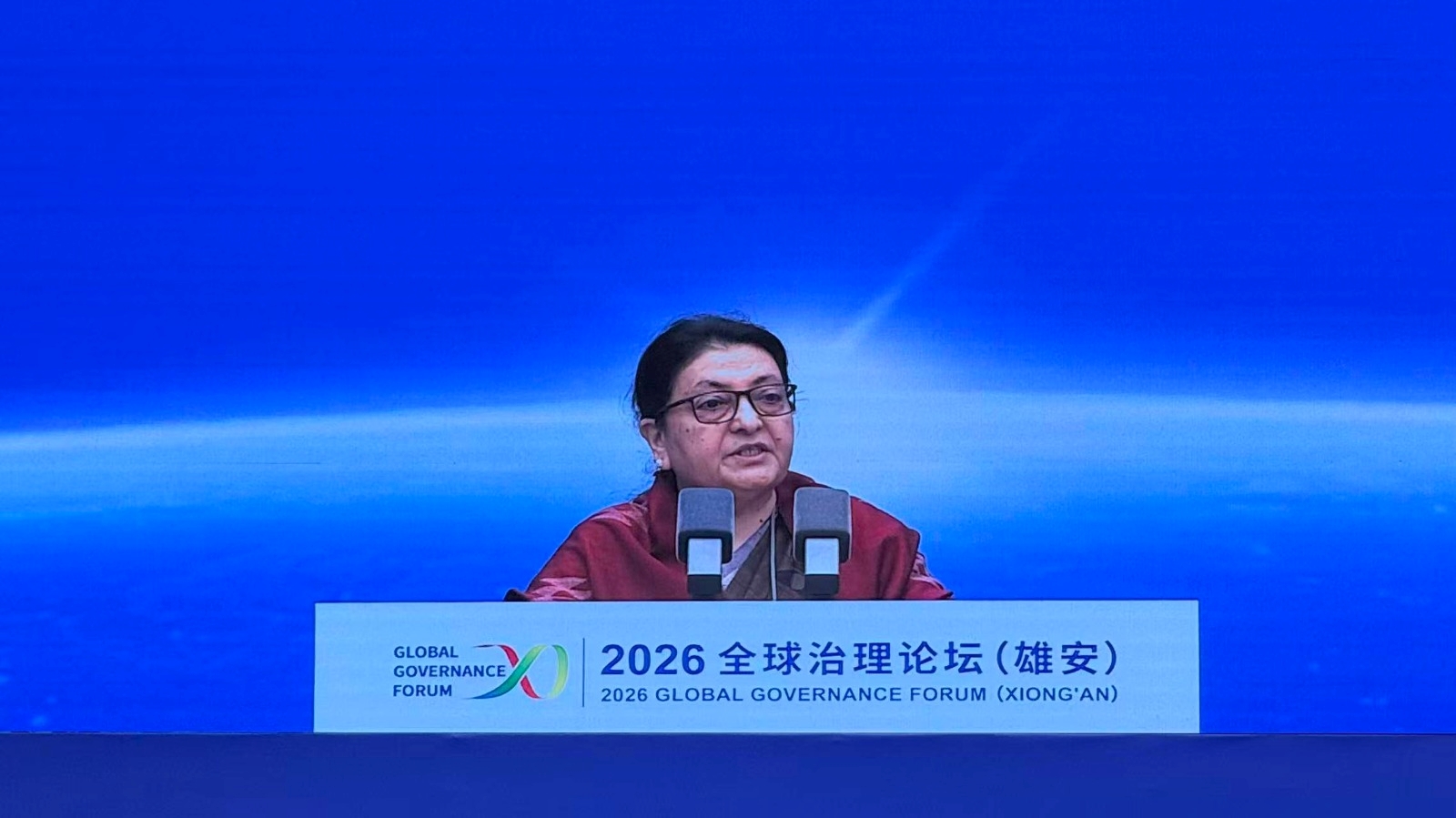
According to her secretariat, addressing the 2026 Global Governance Forum (Xiongan) in China—organized by the China Institute of International Studies—she shed light on the reality of climate justice that Nepal ought to receive.
Highlighting that global governance is directly linked to climate justice, former President Bhandari stated that the Himalayan region is a shared natural heritage intertwined with the water cycle, biodiversity, and ecological balance.
“To conserve this heritage and to mitigate and adapt to the impacts of climate change, it is essential to expand cooperation among Himalayan countries—including China, Nepal, and India—in sharing meteorological data, monitoring glaciers, strengthening early warning systems, and enhancing disaster response,” she said.
She also emphasized the need to strengthen regional and international cooperation for climate risk reduction by ensuring long-term and reliable support from the United Nations and international financial institutions.
“Nepal favors a world order where relationships are guided by international law rather than power, where the voices of all nations are respected, and where the concerns of vulnerable and at-risk countries are given proper space,” she said. “To achieve this, it is necessary to strengthen the United Nations as an effective institution that reflects the diversity and aspirations of the contemporary world.”
Noting that peace and development are complementary to each other, the former President clarified that it is the shared responsibility of the international community to end poverty and hunger, promote human welfare, and redirect resources currently spent on the arms race toward development.
Furthermore, during her address, she stressed the need to make cooperation more effective for inclusive, resilient, and environment-friendly development. “Poverty reduction, quality education and health, employment, social justice, and environmental protection must be the top priorities of international cooperation,” she noted.
She also clarified that Nepal-China relations have continuously evolved since ancient times through cultural exchanges, Buddhist philosophy, and people-to-people warmth. Stating that the shared challenges currently emerging in the world cannot be resolved through the efforts of any single nation alone, she underscored the need for dialogue, cooperation, and collective commitment. She added that a world order based on the UN Charter, international law, and multilateralism has made significant contributions to international peace, security, and development.
Additionally, she expressed confidence that the forum would advance meaningful deliberations toward making the global governance system more just, inclusive, and effective, thereby creating new opportunities for cooperation aimed at world peace, sustainable development, and shared prosperity.
— RSS/Unified Nepal