बाजुरा
BAJURA, Oct 24.
Road infrastructure expansion is widely considered a foundational pillar of development; however, citizens in several settlements across Bajura district continue to be deprived of basic road facilities, with four wards still awaiting road connectivity.
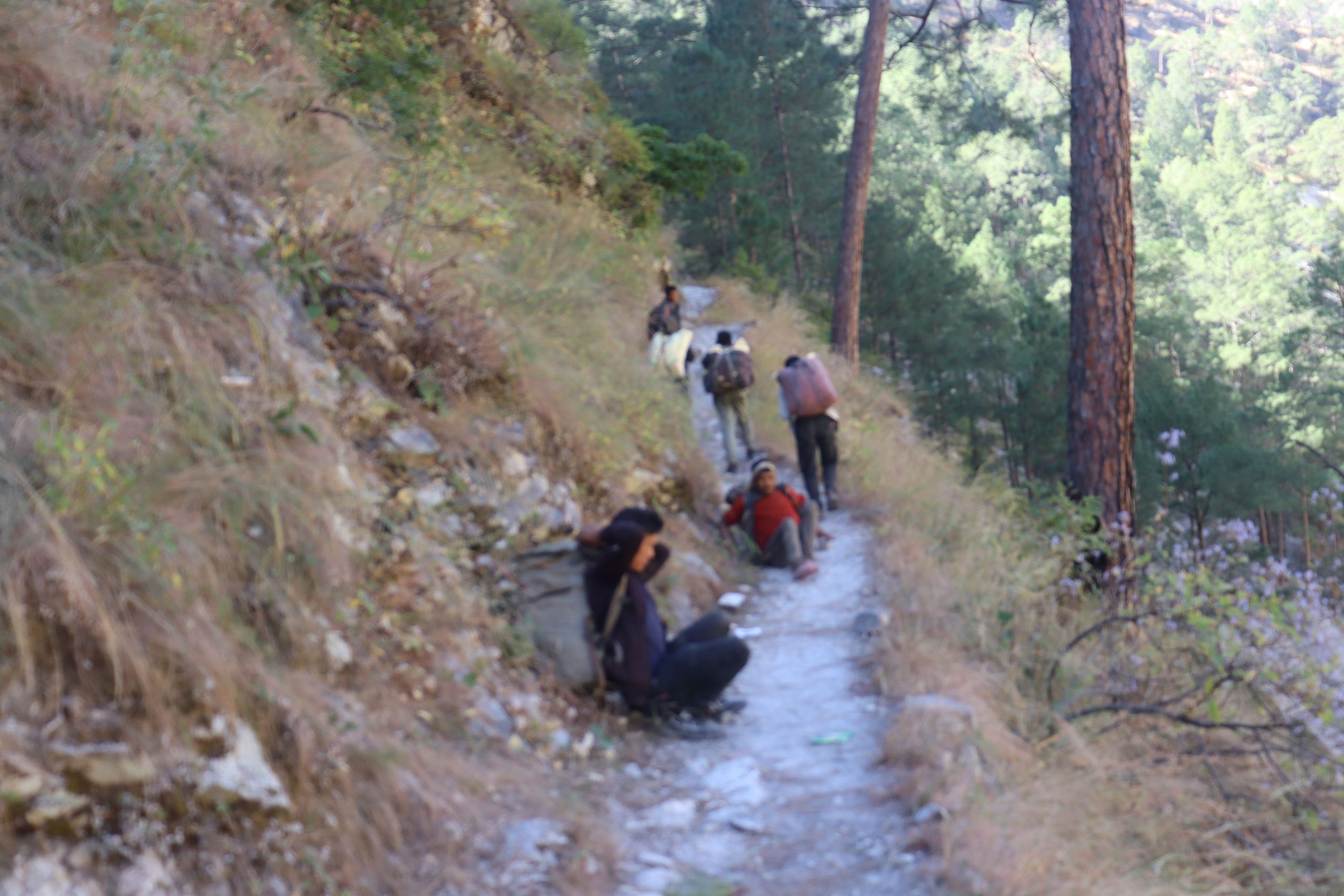
The absence of road access has made it difficult for local residents to transport daily consumer goods, carry patients to health facilities, and bring agricultural produce to markets, severely affecting their daily lives. Although federalism was established and governance was supposedly decentralized to every village, four wards in the district remain entirely outside the road network. Citizens residing in these unconnected wards are still compelled to walk for hours even for routine tasks.
Himali Rural Municipality is the largest local level in the district in terms of area. Out of the nine local levels in the district—comprising four municipalities and five rural municipalities—spanning a total area of 2,188 square kilometers, Himali Rural Municipality alone accounts for 830 square kilometers. Due to its challenging topography, development and construction activities are considerably more difficult there compared to other local levels.
Wards 2 and 3 of Himali Rural Municipality remain unconnected to the road network to this day. Local resident Dhan Bahadur Rokaya stated that citizens from these wards are forced to walk for two to three days just to reach Dhulachour, the center of the rural municipality.
According to him, traveling from one village to another takes more than a day, and food supplies and other goods must be carried manually or transported via mules. “We are completely deprived of communication and roads, let alone other forms of development,” said Mangal Bahadur Budha, Chairperson of Himali Ward-3. “In the absence of roads, we have to walk wherever we go, and whether it is a person or a patient, we have to carry them on our backs.”
Govinda Bahadur Malla, Chairperson of Himali Rural Municipality, noted that during his first term, not a single ward in the municipality was connected to a road network. He attributed these development hurdles to limited resources, geographical ruggedness, and neglect by the federal and provincial governments. “During the previous term, roads had not reached anywhere, and due to our difficult geography, our local resources are simply inadequate,” he said. “Because large budgets for road construction were not allocated by the federal and provincial governments, we have not been able to connect these two wards until now.”
According to Chairperson Malla, a road has recently reached Ward 1—historically the most remote area of the former Bicchhya region—while plans are underway to extend access to Wards 2 and 3 within the current fiscal year. Allocating NPR 1.5 million for Ward 2 and NPR 1.9 million for Ward 3, Malla informed that the bidding process will soon advance to initiate construction works.
Similarly, Amlis in Ward 1 of Gaumul Rural Municipality is another area that lacks road connectivity. Due to severe geographical remoteness and the absence of a road, local residents are compelled to rely on mules or manual portering for healthcare, food transportation, and daily goods.
Gaumul Rural Municipality Chairperson Hari Bahadur Rokaya stated that although a contract worth NPR 1.5 million was signed two years ago to build a road to the ward, the contractor company has failed to initiate any construction work. He noted that despite repeatedly extending deadlines and urging them to begin work according to regulations, the contractor showed no interest. He warned that if work is not completed by the final deadline of mid-Mansingh (mid-December), the contract cancellation process will be advanced.
Furthermore, Kimni in Ward 5 of Triveni Municipality also lacks road access. Kimni is geographically more remote than the other wards of the municipality. “After the advent of federalism, we cast our votes twice to elect local governments and send lawmakers to the federal and provincial parliaments. Leaders repeatedly visited Kimni to ask for votes, promising to build roads and bring development,” said local Tuli Budha. “Yet, neither has a road arrived nor has our dream of riding in a vehicle been fulfilled.”
Locals state that living day-to-day life remains extremely challenging without road connectivity. Bharat Budha, a local resident, mentioned that Kimni residents are forced to walk for hours just to receive services at the municipality office. Triveni Municipality Spokesperson Meen Bahadur Bhandari explained that although tracks have been opened from two or three points to reach the ward, progress has been hindered by insufficient budgets.
The lack of road infrastructure has hampered smooth public mobility, access to health services, marketing of agricultural products, and overall economic activity. Connecting all settlements in the district requires robust coordination and collaboration among local, provincial, and federal governments.
Only by allocating adequate budgets, ensuring regular monitoring of ongoing road projects, and compelling contractors to complete work per contractual agreements can the challenges faced by citizens deprived of road access be successfully resolved. A pervasive issue in the district is that even when development projects are formally contracted, construction companies often leave them stranded. Alongside rural roads, two road projects under the Sudurpashchim Provincial Government have also faced delays and underperformance.
According to the Infrastructure Development Office in Acham, budget allocations for road upgrading and blacktopping in the fiscal year 2082/83 had to be returned unspent because construction companies failed to carry out the work on time. A budget of NPR 200 million for the Martadi-Kolti road and NPR 135 million for the road connecting Martadi via Khaptad-Gairikhad-Atichour was returned.
The contract for the Martadi-Kolti road was awarded to PS Baniya Construction Service, while the contract for the Khaptad-Gairikhad-Atichour to Martadi road was secured by S.M.K.B.C.-Tej JV of Dhangadhi, Kailali.
RSSS/Unified Nepal