
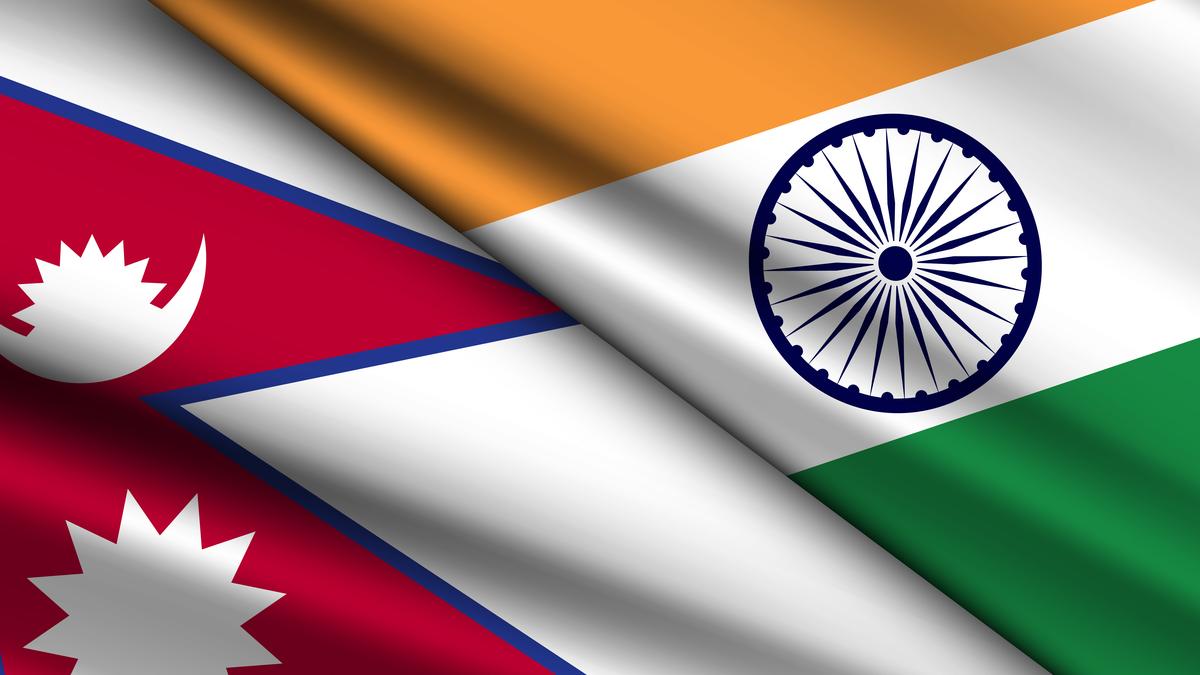
Kathmandu, September 17: Finance Minister Dr Swarnim Wagle has left for New Delhi on a three-day official visit at the invitation of the Indian government, weeks after Nepal was conspicuously absent from the list of countries invited to India’s 18th BRICS Summit.
Wagle departed Kathmandu at 7:35 am on Thursday, leading a six-member delegation. His visit comes with post-disaster reconstruction, economic cooperation and broader Nepal-India relations high on the agenda. He is scheduled to meet Indian Finance Minister Nirmala Sitharaman and External Affairs Minister S Jaishankar, besides participating in high-level diplomatic, business and academic forums.
The timing of the invitation, however, raises an obvious diplomatic question.
India, which hosted the BRICS summit in New Delhi on September 12–13, did not invite Nepal to the major international gathering, despite Nepal being the current chair of the South Asian Association for Regional Cooperation (SAARC). Nepal’s absence was also questioned in Nepal’s National Assembly, where lawmakers asked why the country had not been invited.
Nepal is neither a BRICS member nor a partner country, and analysts have pointed out that India did not organise a BIMSTEC outreach programme alongside this year’s summit, unlike the 2016 Goa summit. Thus, Nepal’s non-invitation was not necessarily a formal diplomatic snub under BRICS rules. Still, the omission generated debate in Kathmandu about Nepal’s diplomatic standing and India’s regional engagement priorities.
Against that backdrop, New Delhi’s decision to invite Nepal’s Finance Minister for a high-level programme involving India’s finance and foreign ministers presents an interesting contrast. The same India that kept Nepal outside the BRICS platform has opened its doors for direct discussions on economic cooperation, reconstruction and diplomacy.
The visit is particularly significant for Nepal as the country seeks international support for rebuilding after the August 26 disasters. Indian officials have already provided humanitarian and emergency assistance following the floods, while Kathmandu is now looking for broader cooperation for recovery and reconstruction.
Wagle’s packed schedule also goes beyond routine bilateral talks. He will attend a diplomatic dialogue hosted by former Indian Foreign Secretary Shyam Saran, interact with the Indian business community and deliver a keynote address at a Confederation of Indian Industry event. He will also participate in an academic discussion at the Delhi School of Economics.
The contrasting developments raise a larger question for Kathmandu, is Nepal being treated by New Delhi primarily as a bilateral neighbour rather than as a country deserving a wider role in regional and multilateral forums?
For Nepal, the immediate challenge may be to convert the high-level access offered to Wagle into concrete outcomes on reconstruction, investment, trade, connectivity and long-term economic cooperation. The visit therefore carries significance beyond the minister’s meetings in New Delhi—it could also test how effectively Nepal can translate bilateral engagement into a stronger regional diplomatic presence.