कोदो खेती
Jumla, October 26.
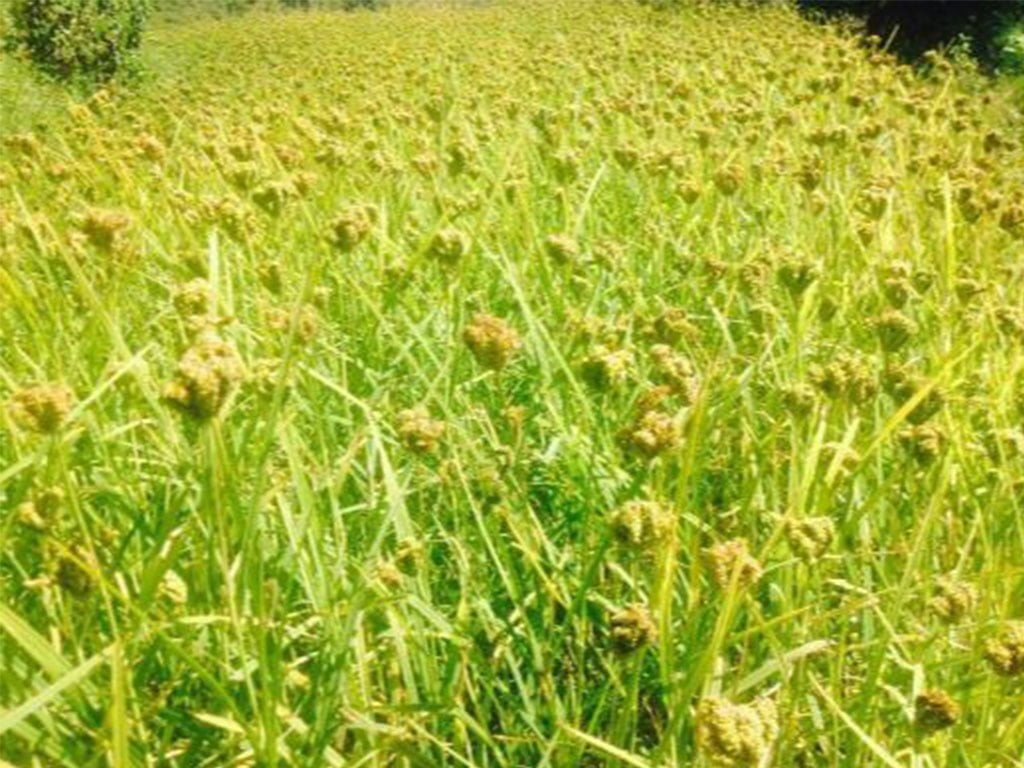
Recently, the number of people engaging in millet farming in the district has been on a declining trend. According to Ram Bhakta Adhikari, Chief of the Agriculture Development Office, although the market demand for millet flour has significantly increased, the number of farmers cultivating the crop is gradually decreasing.
Local levels have failed to direct their attention toward increasing millet production, expanding cultivation, and boosting consumption. Nar Rawat, a leading farmer from Tila-1, Rara, stated that the concerned authorities have shown no interest in promoting the endangered millet crop. Farmers in local villages no longer have an attraction toward millet farming; instead, they are prioritizing vegetables and cash crops.
Millet production has traditionally been higher especially in Tila, Hima, Sinja, Patarasi, and Tatopani rural municipalities of the district. However, Lalit Shahi, Ward Chair of Tila-5, noted that the number of people practicing cultivation has been dropping recently. Currently, millet flour is being sold at NPR 200 per kilogram. Local trader Arjun Budha mentioned that the crop has increasingly become a choice for domestic tourism, generating high demand in the market.
Farmers have expressed concern as indigenous crops produced in the district are gradually disappearing in recent years, with native crops vanishing from arable land. At present, young human resources show no interest in the agricultural profession, and arable lands are being left barren instead of being cultivated. Only older generations, who practice traditional farming, continue to grow native crops, while the younger generation has no interest in producing traditional food crops.
Local traders report that while large-scale millet cultivation was widespread in the upper regions of rural areas until a decade ago, production has now declined despite the surge in market demand. According to data from the Agriculture Development Office, 3,850 metric tons of millet were produced in the district during the last fiscal year, which is a very low yield compared to previous years. The Agriculture Development Office stated that millet is currently being cultivated across 2,740 hectares of land spanning all eight local levels of the district.
— RSS/Unified Nepal