Kathmandu, October 30, 2026 (Kartik 13, 2083)
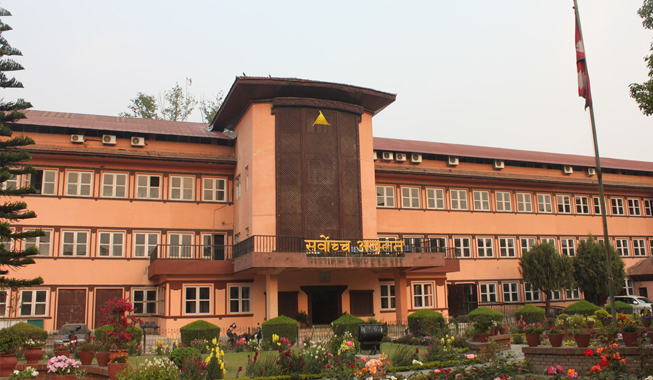
The organization of lawyers, Samajik Nyaya Pragyik Niketan has called for an independent, impartial and time-bound investigation into allegations arising from WhatsApp conversations reportedly found on the mobile phone of Inam Sapkota, in which the names of the incumbent Chief Justice and other Supreme Court justices have surfaced.
Issuing a press release in Kathmandu on Friday, the Institute expressed serious concern over reports of conversations allegedly involving discussions about sub judice cases, bail amounts, requests for meetings and appeals for depositing money. It said the controversy goes beyond an individual or a particular case and raises serious questions about public confidence in the country’s judiciary.
The Institute urged media outlets and other stakeholders to refrain from conducting media trials, emphasizing that the materials remain allegations until verified through lawful procedures. It stressed that no individual should be presumed guilty without established evidence.
However, the Institute maintained that the unproven status of the allegations should not shield any public official from investigation, scrutiny or legal proceedings. It called on the relevant constitutional bodies, including the legislature and other competent authorities, to establish the facts and make their findings public without delay.
Regarding the Nepal Police, the Institute said that protecting the confidentiality of an ongoing investigation should not overshadow the central issue of determining the authenticity of the publicly circulated materials. It demanded a comprehensive investigation into how the information was leaked, whether the materials are genuine and whether any police personnel were involved. It also called for timely public updates on the investigation and subsequent action.
The press release further raised concerns about a potential conflict of interest involving the Chief Justice, who also chairs the Judicial Council. Since the Chief Justice’s name has been linked to the controversy, the Institute argued that remaining involved in decisions concerning the investigation could create a conflict of interest. It called for the Chief Justice to recuse himself from the process and urged the concerned justices to consider voluntarily stepping away from judicial duties until the investigation is concluded.
The Institute proposed several measures to ensure accountability and restore public confidence in the judiciary, including:
- Independent forensic examination: Conduct an independent forensic examination of Sapkota’s mobile phone and digital materials and make the findings public within a specified timeframe.
- Impartial institutional investigation: The Judicial Council should initiate a transparent and time-bound investigation on its own initiative, with the Chief Justice completely excluded from the process to avoid conflicts of interest.
- Voluntary recusal: The justices facing questions should consider stepping aside from judicial responsibilities until the investigation is completed and publicly clarify their positions.
- Legal accountability: If the allegations are substantiated, action should be taken under prevailing laws, irrespective of the positions or influence of those involved. The Institute also suggested that Parliament consider initiating impeachment proceedings in accordance with constitutional provisions, if warranted.
- Professional oversight: The Nepal Bar Association and legal professionals should actively submit complaints regarding possible violations of professional conduct and monitor the investigation.
- Institutional reforms: The Institute called for public disclosure of judges’ asset declarations, greater transparency in the case and bench allocation system, and independent oversight of judicial conduct.
The Institute emphasized that public confidence is fundamental to the functioning of the justice system and that the controversy must not be concealed or superficially addressed.
“Justice must not only be done; it must also be seen to be done,” the Institute noted, underscoring the need for transparency, impartiality and institutional accountability.
The press release is signed by Rabindra Bhattarai, President of Niketan, along with the Institute’s Vice-President and General Secretary.
The Institute concluded by urging state institutions to ensure that the matter is resolved through a credible investigation, disclosure of the facts and accountability in accordance with the rule of law.