सृष्टिमा होइन, दृष्टिमा हुन्छ दोष
KATHMANDU, October 13:
Every object, living being, and structure created by nature possesses its unique characteristics, beauty, and independent existence. The height of the mountains, the flow of rivers, the greenery of forests, the aridness of deserts, the colors of flowers, the songs of birds, and the diversity of human life are all extraordinary creations of nature. Nature has never created anything considering it unnecessary or meaningless. However, many of us tend to view objects and circumstances through the lens of our own expectations, needs, and self-interest. Therefore, the problem sometimes lies not in creation, but in our perception.
The same mountain can be an obstacle to some, while representing immense tourism potential for others. The same river can be a flood hazard for one, while serving as the basis for life, energy, and civilization for another. A forest might look like land that should be cleared for settlement to someone, whereas that very forest may be the home of countless living beings, a source of water, and the protector of the Earth’s vital oxygen for someone else. The object is the same, but the perspective differs. This very difference in perspective shapes our understanding, behavior, and conclusions.
We often seek to mold nature to suit our convenience. We dislike a river flowing on its own course, so we want to dam it to fulfill our needs. A forest in its natural state may not seem useful enough to us, so we seek to exploit it for timber, land, or other resources. Instead of leaving mountains in their natural form, we begin cutting them down for roads, buildings, mines, or other infrastructure. The tendency to view oceans, rivers, mountains, forests, and land not as independent entities of nature, but merely as instruments to satisfy our needs, is growing.
Utilizing nature is human nature and is not inherently wrong, because human development itself has been possible through cooperation with nature and the prudent use of natural resources. Problems begin when the line between utilization and exploitation blurs. When we treat nature as an object that must bend to our will, we begin to blame it when it reacts according to its natural laws. If a flood occurs, we blame the river, but we fail to consider the structures built by encroaching upon the river’s natural floodplains. If a landslide occurs, we blame the mountain, but we do not question uncontrolled road construction, deforestation, and poor land-use practices. When temperatures rise, we blame the weather, but fail to examine our own role in deforestation, pollution, and the excessive exploitation of natural resources. Thus, rather than accepting the consequences of our actions, we attempt to absolve ourselves of guilt by blaming creation.
In truth, nature is not a servant created to fulfill our desires. Nature operates according to its own laws, balance, and processes. We must understand it and proceed in harmony with it. A mindset of coexistence with nature, rather than trying to conquer it, is essential.
The same principle applies to human life. We classify people as beautiful or ugly, capable or incapable, successful or unsuccessful based on our own subjective standards. If someone’s physical appearance does not match our standard of beauty, we consider them less attractive. If someone’s lifestyle differs from our thinking, we deem it wrong. Society sometimes identifies differently-abled individuals by their limitations rather than their capacities. Here too, the problem lies not just within the individual, but in our perspective toward them.
Beauty has no single universal standard. The beauty of a mountain is not like that of the ocean, the beauty of a flower is not like that of a tree, and the beauty of a river is not like that of a lake. That is why every human being has their own unique traits. Diversity is the beauty of nature. If the world had people of only one color, one shape, one voice, and one kind, creation would be so monotonous! Yet, in modern society, we have begun associating beauty with markets and self-interest, seeking commercial value even in natural elements. If a place is scenic, we tie it to the tourism trade; if a forest has valuable resources, we link it to economic gain; if a river can generate electricity, we prioritize its economic potential over its natural existence. If we begin measuring the value of nature solely on how much money can be earned from it, we fail to understand its true worth.
Nature is not merely a resource; it is the foundation of existence. A river is not just water; a forest is not just timber; a mountain is not just a scenic view; land is not just property. All of these possess their own ecological, social, cultural, and life-sustaining values. Just because we cannot bend a part of nature to our selfish ends does not make that nature flawed. Sometimes, the gap between our expectations and reality also leaves us dissatisfied with creation. We wish for everything in life to happen according to our desires—the weather to be favorable, people to behave as we wish, nature to be available in the form we want, and circumstances to always work in our favor. However, life and nature follow their own rhythms; the world does not run solely on our whims.
Therefore, the first thing that needs to change is not creation, but our perspective. If we begin to view nature not as an object of consumption, but as a fellow traveler, our behavior changes. If we start evaluating people not by their outward appearance, property, or social status, but by their human values, society transforms. And if we begin to understand differences not as weaknesses, but as diversity, our relationships grow even more beautiful.
Once perspective changes, the exact same world looks different. In the rain, one person might see mud and inconvenience, while another sees life-giving water. In the dry leaves of autumn, one might see an end, while another sees nature preparing for new life. On a difficult mountain path, one might see an obstacle, while another sees possibility and courage. Therefore, the world is not always just as we see it; the meaning of the world is constructed according to how we look at it.
The future of our civilization also depends on this perspective. The arrogance of dominating nature can lead us toward long-term crisis, whereas the perspective of coexistence with nature can pave the way for sustainable development. Development does not mean destroying nature to add structures, but rather maintaining a balance between human needs while preserving the integrity of nature.
Ultimately, creation has given us diversity, and we possess the vision to seek meaning within it. Therefore, before searching for flaws in every creation of creation, it is essential to examine our own outlook. If we seek to use nature for our selfish ends and then blame it when it fails to fulfill our desires, the fault lies not in nature, but in our own mindset. Nature continues to do its work: flowers bloom, rivers flow, mountains stand tall, forests thrive, and seasons change. That is why the life of the universe continues to move forward. The only question is—how do we view all of this life and existence?
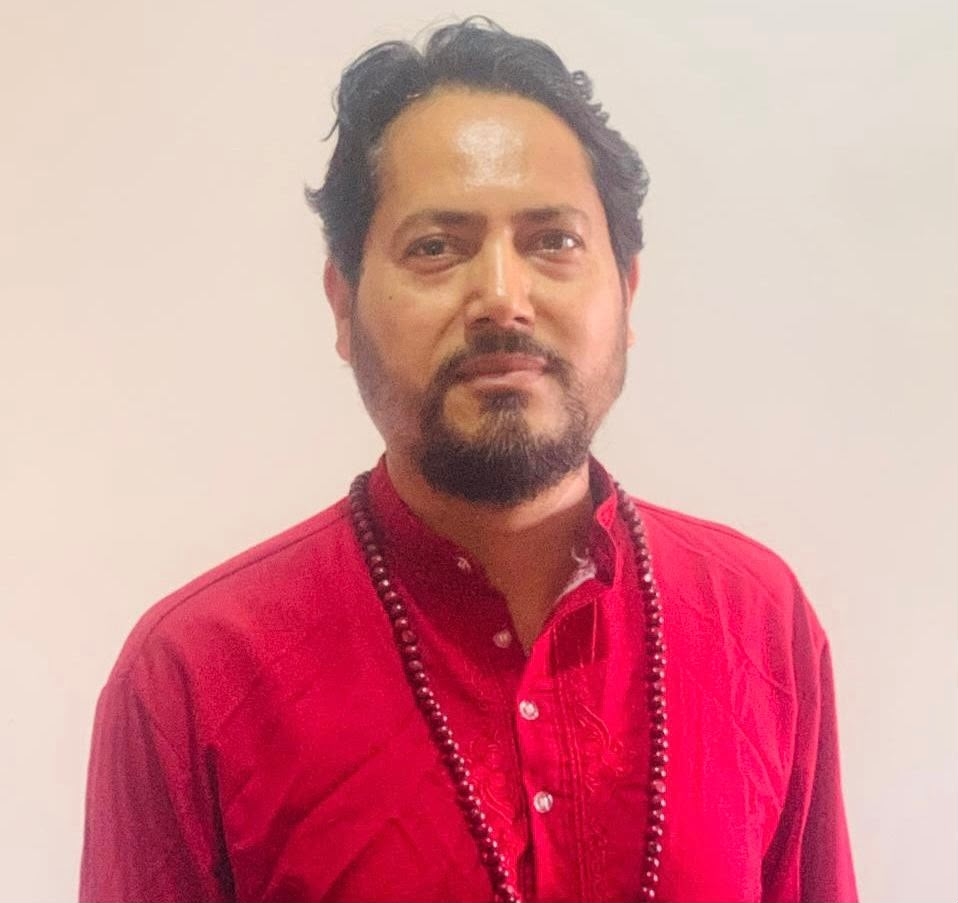
— Dr. Tej Bahadur Karki
(RSS)