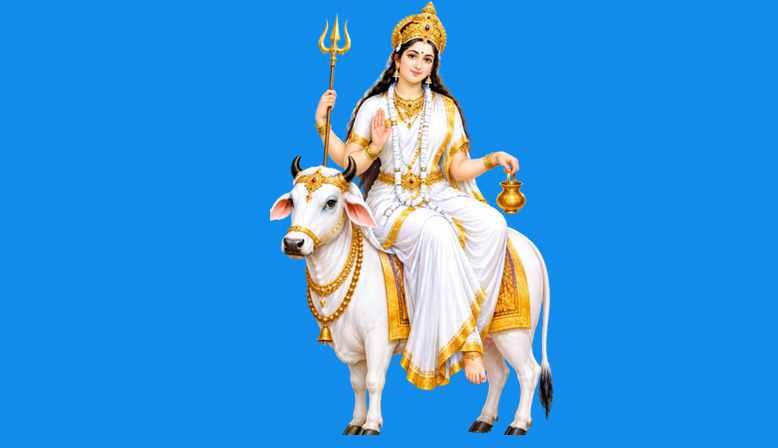
आज महाअष्टमी पर्व
KATHMANDU, October 18:
The Maha Ashtami festival, observed on the eighth day of the bright fortnight of Ashwin, is being celebrated with great fervor and special worship of Goddess Durga Bhavani across the country today.
On the eighth day of Bada Dashain, special prayers are offered to Mahakali, Mahalakshmi, and Maha Saraswati. According to various Vedic Sanatan traditions, Maha Ashtami holds immense significance as it is considered the day to invoke supreme power in Goddess Durga. As per scriptural traditions, special pujas and ritual animal sacrifices are performed today at Dashain ghars, kotas, and various Shakti peethas (power centers) across the state. Recitations of the Durga Saptashati, Shrimad Devi Bhagavata, and Devi Stotra are also held.
Dharamashastra expert Prof. Dr. Ramchandra Gautam explains that since both sentient and insentient beings desire liberation, performing ritual sacrifices in temples and sacred yajnas helps those animals attain salvation according to the scriptures. “Scriptures describe three types of worship: Satvic, Rajas, and Tamas. Satvic worship involves offerings like water, sandalwood, and unbroken rice grains (akshata) through Shodashopachara. Satvic worship accompanied by animal sacrifice is defined as Rajas worship, while Rajas worship that also includes alcohol offerings is classified as Tamas worship. Therefore, animal sacrifice is also scriptural,” he stated.
However, animal sacrifice is strictly forbidden for Brahmins. Scholars of religion note that animal sacrifice holds significance for destroying demonic tendencies, empowering the Goddess, and ensuring the liberation of the animals. Dr. Gautam mentions that since this is discussed in the eighth chapter of the Durga Saptashati (Chandi), animal sacrifice cannot be dismissed as unscriptural. “Scriptural injunctions state that state rulers must methodically perform animal sacrifices to attain prowess, mantra power, and enthusiasm,” he noted. Since these three forms of power can be attained solely from Goddess Durga, ritual animal sacrifices are performed today.
Tonight, the festival will also be marked by Kalaratri worship, which includes specific ritual sacrifices and prayers. Kalaratri worship holds special significance due to its distinct ritual procedures and resolutions, though Brahmins are traditionally exempt from performing it.
From early this morning, a large influx of devotees has been thronging various Shakti peethas inside the Kathmandu Valley—including Guhyeshwari, Maitidevi, Kalikasthan, Bhadrakali, Naksal Bhagwati, Shobha Bhagwati, Bijeshwari, Indrayani, Raktakali, Vajrayogini, Sankata, Vajravarahi, Dakshinkali, Chamunda, Sundarimai, Bhatbhateni, and Baglamukhi—to offer prayers and sacrifices.
Similarly, massive crowds of devotees are witnessing similar religious fervor at prominent Shakti peethas outside the Valley, such as Kalika Bhagwati in Dhading, Manakamana in Gorkha, Gahwamai in Parsa, Chhinnamasta Bhagwati in Saptari, Rajdevi in Dhanusha, Ugratara in Dadeldhura, Chandeshwari, Nala Bhagwati, and Palanchok Bhagwati in Kavrepalanchok, Palanchok Bhagwati in Sindhupalchowk, Kalinchowk Bhagwati in Dolakha, and Pathibhara in Taplejung, among others.
Today, machinery, weapons, and vehicles are also specially cleaned, placed near the enshrined deities, and worshipped with ritual animal sacrifices, treating these tools as the weapons of the Goddess.
Prayers are also offered invoking the Chaturangini Sena (the four-wing army) alongside the weapons of the Goddess. Those who do not practice animal sacrifice offer alternative symbolic items in their prayer rooms according to family traditions, such as gourds (ghiraula, kubhindo), cucumbers, radishes, and coconuts.
On the night of Maha Ashtami, the Dashain Ghar at Hanuman Dhoka will host the state-sponsored Kalaratri worship, featuring the ritual sacrifice of 54 he-goats and 54 buffaloes.
RSS/Unified Nepal