नगरा बाजा
LAMJUNG, October 14.
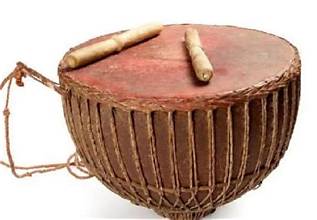
In the past, the rhythmic beat of the nagara drum would echo through the villages of Lamjung with the arrival of Ghatasthapana. The tradition of playing the drum from house to house signaled the onset of Dashain, adding a vibrant festive spirit to the communities. However, as this practice gradually fades away, the age-old cultural tradition tied to the festival is facing a crisis. While the tradition of playing the nagara starting from Ghatasthapana is still maintained at the Kalika Temple within the Lamjung Palace premises in Gaunshahar, Besishahar Municipality-3, its practice in surrounding villages has shrunk significantly.
According to Somraj Baral, the head priest of the temple, the Kalika Temple was established alongside the former palace, and the tradition of playing the nagara originated there before spreading to local settlements. The drum is played twice a day—morning and evening—starting from Ghatasthapana, and holds special significance during Bada Dashain, Chaitra Dashain, Shree Panchami, and the Nwagi (harvest festival) day. He noted that while the nagara is played in the rhythmic pattern of a mangal dhun (auspicious tune) at the palace, the style in villages varied according to local customs.
“In the past, many people knew how to play the nagara, but now the number of people with this skill is declining,” Baral said. “Because learning to play it takes time and the instrument itself is expensive, the younger generation’s interest is waning.” He emphasized the need to teach youth the skill to keep the tradition alive, alongside initiatives from the government level for its preservation.
Local Krishna Prasad Shrestha of Besishahar Municipality-1, Udipur, shared that only two or three people now remain in the Udipur area who know how to play the nagara. Similarly, Rajendra Bohora of Besishahar Municipality-3, Bohorabesi, noted that until a few years ago, nagara-playing troupes would visit houses in Bohorabesi, Besi, and Bakunde villages, but that practice has now disappeared. He added that the absence of these troupes and their distinctive sound in villages is causing this old Dashain tradition to break down.
Loknath Ghimire, a local of Marsyangdi Rural Municipality-6, Bahundanda, also recalled that while playing the nagara was common in the village previously, its sound has not been heard for the past few years. “Hearing the nagara play used to give us the true feeling that Dashain had arrived,” he said.
According to Motiram Pariyar of Besishahar Municipality-3, the tradition of playing the nagara is closely linked to the cultural identity of the Pariyar community. He recalled that in the past, during Dashain, troupes would visit homes to play the drum, and in return, houseowners would provide grain or meat after livestock was slaughtered. He pointed out that the passing of the older generation, age-related inability to play, and a lack of interest from youth have brought the tradition to the verge of extinction.
To preserve this cultural tradition tied to the arrival of Dashain, it is essential to transfer the skill of playing the nagara to the younger generation. Only by safeguarding the knowledge and skills of the elders while increasing youth participation can this heritage be handed down to the future.
— RSS / Unified Nepal