
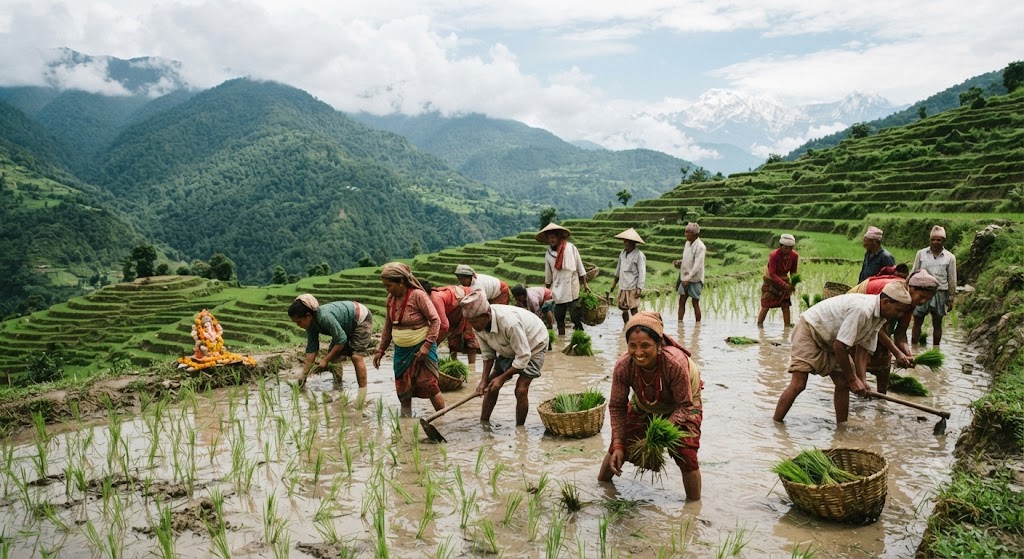
Kathmandu | July 7 — Paddy transplantation across Nepal has progressed at a slower pace this season following the delayed arrival of the monsoon, with just 32.4 percent of the country’s cultivable paddy land planted as of this week. Despite the sluggish start, agriculture officials and crop experts remain optimistic that the planting season can recover if rainfall remains consistent through the rest of July.
According to data from the Ministry of Agriculture and Livestock Development, Nepal has approximately 1.37 million hectares of land designated for paddy cultivation each year. This year’s monsoon entered the country on June 19, six days later than the average onset date of June 13, delaying field preparation and transplantation activities in several districts.
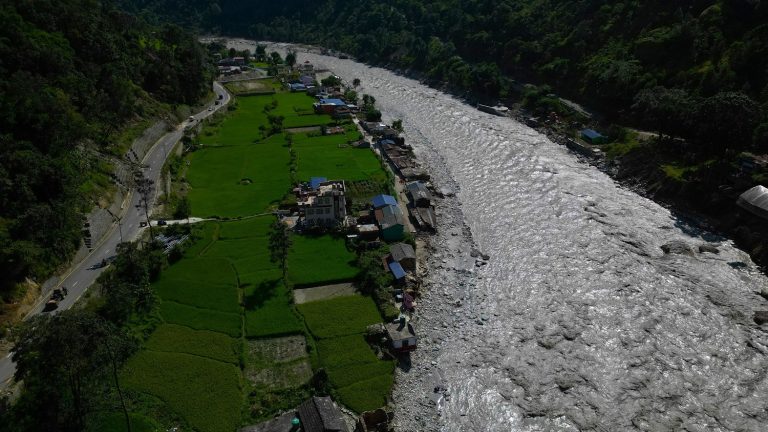
The pace of plantation varies across provinces depending on rainfall and irrigation availability. Areas with adequate irrigation have continued planting despite the delayed rains, while many rain-fed farming communities are still waiting for sufficient precipitation before completing transplantation.
Agriculture authorities have stated that the current delay does not necessarily indicate a poor harvest. Agronomists note that paddy transplanted by the end of July can still produce satisfactory yields, provided favourable weather conditions continue during the growing season.
Rice remains Nepal’s most important staple crop and contributes significantly to rural livelihoods, food security and the national economy. Every planting season is closely monitored, as weather conditions during the monsoon largely determine annual paddy production and influence the country’s dependence on rice imports.
The Ministry has urged provincial and local agricultural offices to continue monitoring crop conditions and assist farmers with technical support where necessary as transplantation activities accelerate with the advancement of the monsoon season.