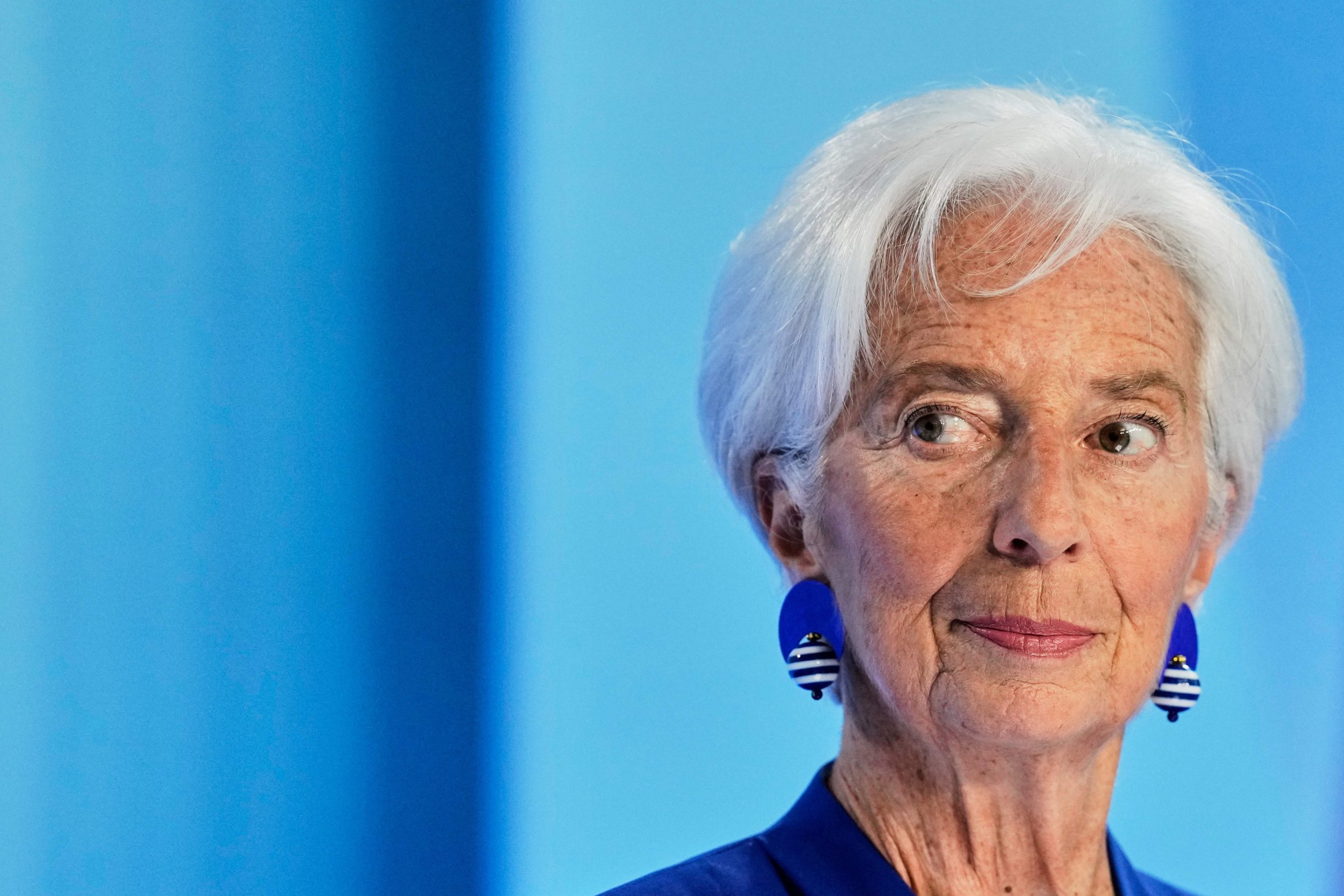
क्रिस्टिन लेगार्ड
FRANKFURT, October 30:
European Central Bank (ECB) President Christine Lagarde is set to step down on February 7, nine months ahead of the completion of her eight-year term.
Her decision will provide leaders of the European Union (EU) with the opportunity to select a new president before France’s presidential election in 2027.
Analysts note that this move is aimed at preventing any potential impact on the appointment process should far-right candidate Marine Le Pen secure a victory.
Seventy-year-old Lagarde’s term was originally scheduled to end on October 31, 2027.
Expressing that leading the ECB has been a matter of pride and privilege, she stated that she wishes to free herself from the obligations of political neutrality tied to the office so she can speak independently on matters beyond monetary policy.
The ECB determines interest rates for the 21 countries using the euro, which influences borrowing costs ranging from home purchases to industrial establishments.
European Council President Antonio Costa has announced that the process to select a new president will be initiated immediately.
Meanwhile, ECB Chief Economist Philip Lane’s term is concluding on May 31, while Executive Board member Isabel Schnabel will step down on January 3.
Berenberg Bank Chief Economist Holger Schmieding suggested that EU leaders might attempt to forge a consensus ahead of the December 17–18 summit regarding appointments to these three senior positions.
Potential candidates for the ECB presidency include Klaas Knot, former head of the Dutch central bank, and Pablo Hernández de Cos, General Manager of the Bank for International Settlements.
According to Schmieding, the push to select a new successor while President Emmanuel Macron remains in office is designed to preempt any uncertainties surrounding a potential victory by Le Pen in France.
During the tenure of Lagarde—who was appointed in 2019 as the successor to Mario Draghi—the ECB operated an emergency bond-purchase program worth €1.35 trillion in 2020 to maintain credit flow across the economy during the COVID-19 pandemic.
In 2012, Draghi’s commitment to take all necessary measures to defend the euro helped mitigate market volatility driven by the eurozone debt crisis.
Lagarde’s resignation announcement has also overshadowed the ECB’s interest rate decision. Despite annual inflation climbing to 3.8% due to surging oil prices resulting from the US-Iran conflict, the bank kept its benchmark interest rate unchanged at 2.5%.
The ECB’s target inflation rate stands at 2%. While interest rates are crucial for controlling inflation, analysts point out that rising yields in the bond market have made borrowing significantly more expensive for the private sector.
— AP