थानीमाई मन्दिर
Tanahun, November 11:
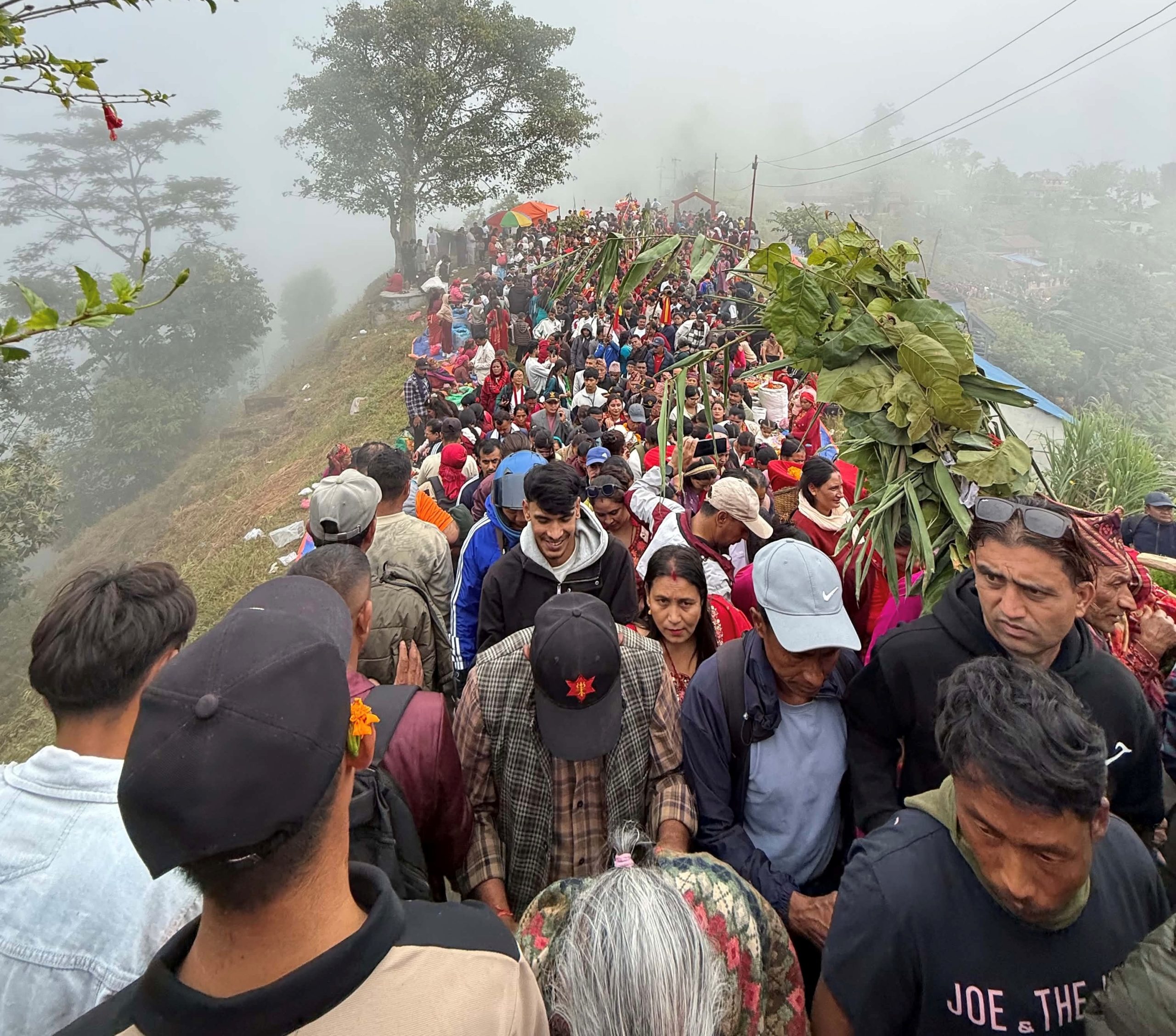
The Thanimai Temple, situated in Basantapur, Bhanu Municipality-7, Tanahun, has increasingly developed as an important center of religious faith in recent times. Perched atop a high hill, the temple attracts devotees from Tanahun and various parts of the country to offer prayers, worship, and fulfill religious vows (bhakal). Especially during specific months of the year, the gathering of devotees on Tuesdays, along with the offering of flower canopies (ful ko doli) and the resounding tunes of traditional panchai baja (traditional musical instruments), creates a festive religious atmosphere in the Basantapur area.
The level of devotion and attraction toward the Thanimai Temple is also reflected in the statistics for the recent month of Kartik. Within just two Tuesdays of Kartik, 93 flower canopies were brought into the temple. According to Jeevan Thapa, Chairman of the Temple Management Committee, 91 flower canopies were offered on the third Tuesday of Kartik, and two were offered on the fourth Tuesday. During this period, more than 10,000 devotees visited the temple to offer worship.
Chairman Thapa stated that no flower canopies arrived on the first Tuesday of Kartik as it coincided with Maha Nawami, and the tradition of offering canopies did not take place on the second Tuesday either. Subsequently, after 91 canopies were brought in on a single day during the third Tuesday, the temple witnessed an impressive influx of devotees. Only two canopies arrived on the fourth Tuesday due to the Tihar festival, he added.
The tradition of offering flower canopies at the Thanimai Temple is a distinctive aspect of the local religious culture. Every year, flower canopies are specially offered on Tuesdays during the months of Baisakh, Ashwin, Kartik, Mangsir, Magh, Falgun, and Chaitra. On Tuesdays during these months, devotees arrive at the temple from various locations with their heartfelt wishes.
According to Thapa, there is a deep-rooted religious belief that heartfelt wishes are fulfilled when flower canopies are offered at the Thanimai Temple. Because of this enduring faith, devotees have been visiting the temple for years, returning to offer flower canopies once their vows are fulfilled. The ritual of offering canopies is conducted according to its own distinct traditional religious procedures. On the day prior to offering the canopy—specifically Monday—devotees perform Satyanarayan worship and prepare the canopy. Bringing along the prepared canopy adorned with flowers, decorative garlands (toran), and other materials according to their vows, devotees arrive at the temple early Tuesday morning.
Circumambulating the Temple to the Rhythm of Panchai Baja
The sight on the day flower canopies are offered at the Thanimai Temple is striking. Devotees circumambulate the temple three times while singing, dancing, and carrying the flower canopies accompanied by panchai baja. The Basantapur area resonates with the playing of panchai baja, the joyous singing and dancing of devotees, and chants hailing Thanimai.
After completing the circumambulation of the temple, the decorative garlands brought along with the canopies are tied in three rounds around the shrines situated in the upper hilltop temple complex. Afterward, devotees enter the temple to worship and pay homage to Thanimai, expressing gratitude for the fulfillment of their wishes.
Because of devotees arriving with colorful banners, flower garlands, and panchai baja, Tuesdays transform the atmosphere of Basantapur into a festive celebration. For pilgrims arriving from distant places, this is not merely an opportunity for worship, but a meaningful way to connect with an enduring religious tradition. Regular worship is conducted at the temple every day except during the month of Shrawan, Ekadashi, and Aunshi. However, on Tuesdays during the special months dedicated to offering flower canopies, the pressure of devotees increases significantly.
An Attraction Combining Religious Faith and Natural Beauty
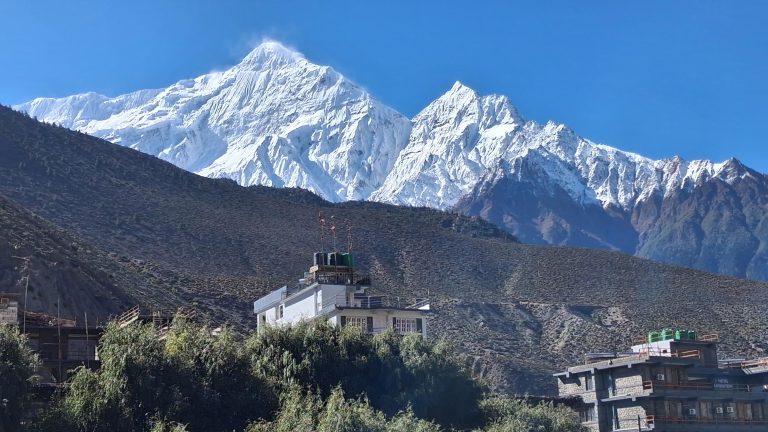
Situated at an altitude of approximately 1,200 meters above sea level, the Thanimai Temple is an attractive destination not only from a religious perspective but also for its natural scenic beauty. From the temple premises, visitors can enjoy panoramic views of surrounding regions including Gorkha’s Laxmi Bazar, Ligligkot, Palungtar, and Lamjung’s Rainaskot. On clear days, the distant snow-capped mountain ranges further captivate tourists visiting the area.
For those wishing to enjoy nature alongside spiritual pilgrimage, this location holds immense potential to serve as an ideal destination. The elevated setting of the temple, its surrounding natural environment, and the sweeping views of various landscapes offer everyone who visits a wonderful opportunity to immerse themselves in nature.
At a time when efforts are underway to link religious sites with tourism, the Thanimai Temple holds significant potential for development as a prominent religious and tourist destination. Particularly on days when flower canopies are offered, the presence of devotees and cultural activities helps expand the identity of the local region.
A Temple Linked to History and Legends
Locals believe that worship at Thanimai began around this period, and the site has progressively established itself as a center of religious faith. This age-old legend passed down through generations has rendered the religious significance of the temple even more special.
The Thanimai Temple suffered damage during the devastating earthquake of April 25, 2015 (2072 BS). Following the damage, the temple was reconstructed. The reconstruction was completed at a cost of Rs 1.4 million received from the Ministry of Culture, Tourism, and Civil Aviation, alongside Rs 600,000 collected through offerings made at the temple.
— RSS