माहुत समुदाय
Ranjha (Banke), October 9।
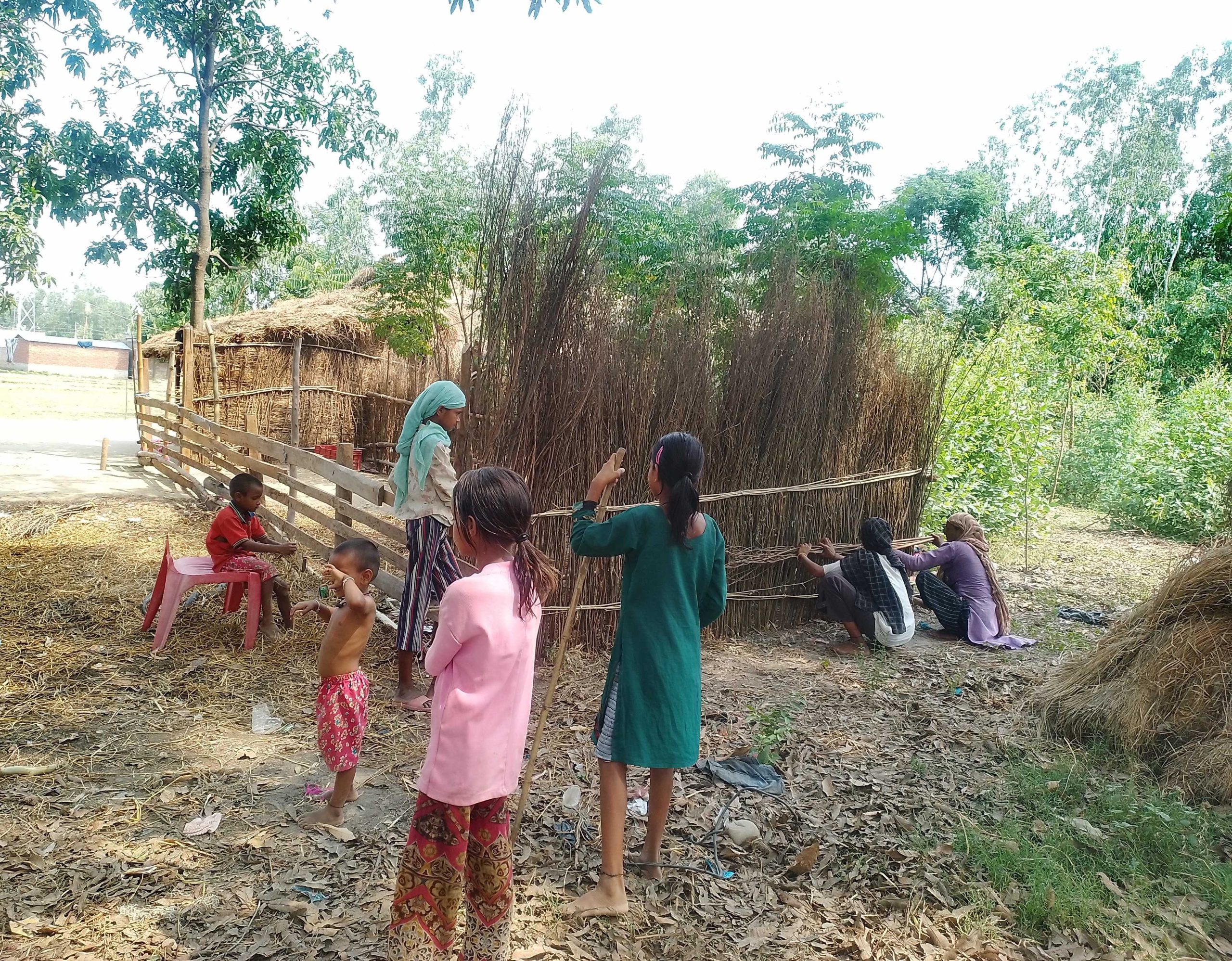
Kelaram Mahut, a resident of Magantatol in Hirminiya, Duduwa Rural Municipality-6, Banke, has been wandering the streets of Nepalgunj in search of employment for many years. Finding no work in the city leaves him constantly dispirited and frustrated.
“Because we survived by begging, our ancestors and the entire community were referred to as Maganta (beggars). Having abandoned our ancestral occupation of begging, we now face immense hardship in forging a new livelihood and identity,” Kelaram shared. “The Mahut community is currently undergoing extreme poverty, scarcity, and crisis. Managing daily life without a steady occupation or a distinct recognized identity has become exceptionally difficult.”
In settlements across Hirminiya and Basudevpur in Ward No. 19 of Nepalgunj Sub-Metropolitan City, among others, the community consists of approximately 200 households with a population of around 1,000. Until a generation ago, the surname Maganta was recorded on official citizenship certificates, a term the younger generation today finds derogatory to their self-respect. Consequently, youth have begun adopting Mahut as their surname. While changing the name has restored a degree of dignity, their overall standard of living remains unchanged.
Most children in the Mahut community remain deprived of education, while inadequate access to healthcare facilities leaves the health status of women particularly vulnerable.
According to Lalwa Mahut, a resident of Suiyagaun in Nepalgunj-19, community members do not own even a minimal parcel of land for agriculture, nor do they possess skills for employment or capital to start a business. “There is no clean drinking water in the village, and proper road connectivity to our settlement has not been built,” Lalwa said. “We never know where, how, or by whom the budget allocated by the local government for our development is spent. While other marginalized groups fight for political access, we are struggling merely to establish our basic identity.”
However, a significant shift in mindset has emerged among the younger generation of the Mahut community. Consciousness has taken root among the youth that they must live with dignity through hard work and labor rather than begging. Jawanti Mahut, a leader of the community and executive member of Duduwa Rural Municipality, stated that the community has largely abandoned begging.
“Although people are managing to survive through subsistence farming and daily wage labor, the Mahut community remains excluded from state opportunities across every sector,” she said. “The state must recognize this positive shift in the new generation and create employment opportunities and facilities for them.”
Despite being a minority and marginalized group, the Mahut community has not yet been officially listed by state bodies. Consequently, the community remains entirely deprived of social security and special benefits provided by the government to minority and endangered communities.
Mohanram Mishra, Ward Chairperson of Duduwa Rural Municipality-6, acknowledged that the Mahut community lives under severe hardship. “This community is striving to transform itself by leaving its ancestral occupation behind,” Chairman Mishra stated. “Because they are not formally listed as a minority or marginalized community at the government level, we have been unable to deliver the targeted state services and benefits they deserve.”
He added that the Mahut community, striving to stand on the foundation of hard labor, is now knocking on the government’s doors to secure official recognition as a minority group.
— RSS