याकचौँरी
MUSTANG, Nov 5 :
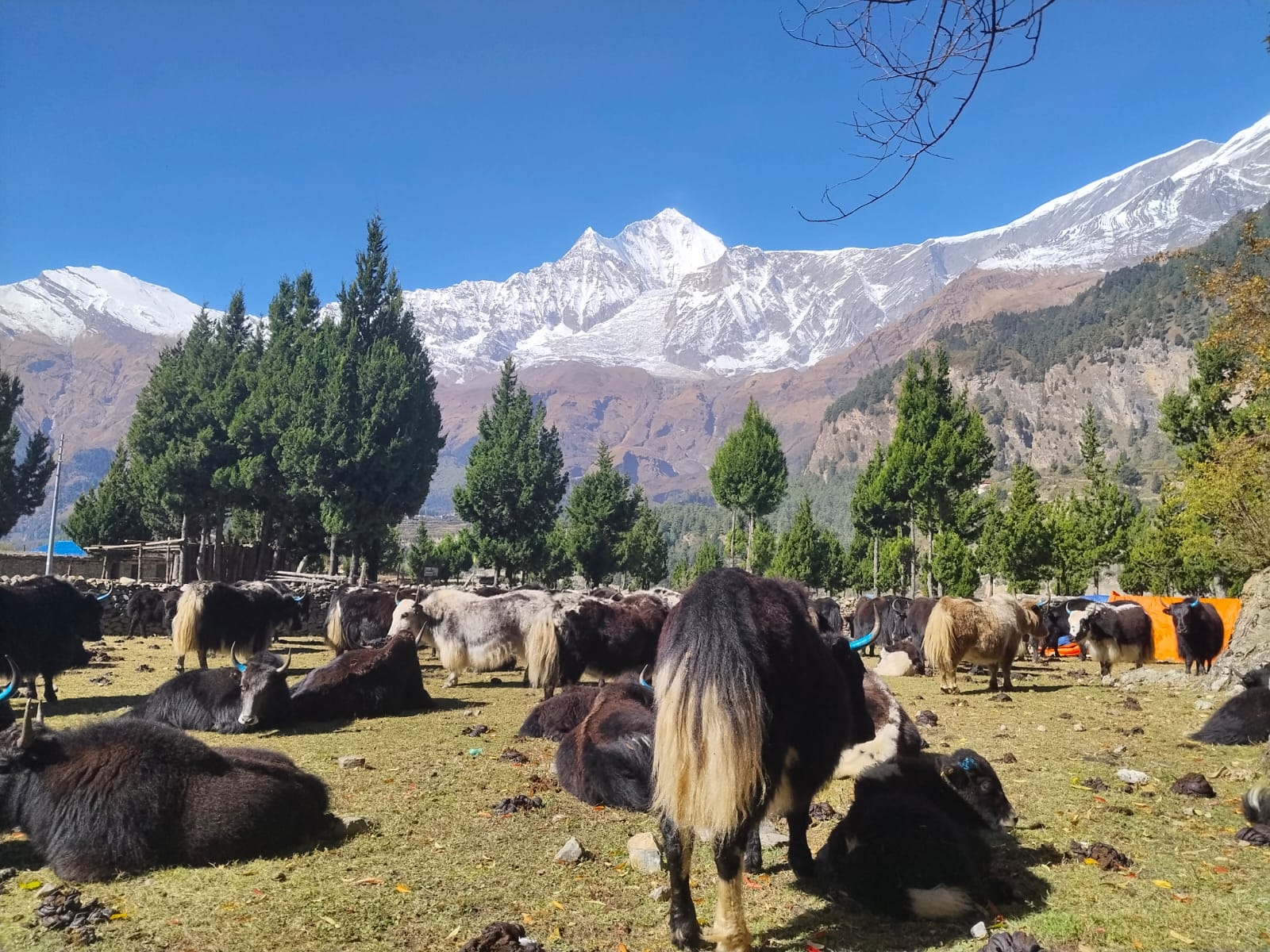
Yak herds have been relocated from the high pastures of Mustang to lower valleys to protect them from the harsh cold. Raised in migratory sheds at altitudes ranging from 4,000 to 5,000 meters above sea level, the yaks were transferred to safer locations due to the high risks of heavy snowfall and freezing temperatures during the winter season.
According to Sojan Hirachan, Central General Secretary of the Yak and Chauri Farmers Federation Nepal, it is a regular practice to keep yaks in the high pastures from the rainy season in Baisakh (April-May) through Asoj (September-October), and move them closer to human settlements for the winter from Kartik (October-November) to Chaitra (March-April). During winter, high-altitude pastures and grazing grounds face severe risks of snowstorms and extreme cold, necessitating their relocation near villages.
Hirachan noted that the five-month winter migration is driven not only by the risks of snow and cold, but also by acute challenges in the high-altitude grazing areas—such as acute forage shortages, difficulties in feed management, drinking water scarcity, and grueling daily routines for herders tending to the animals.
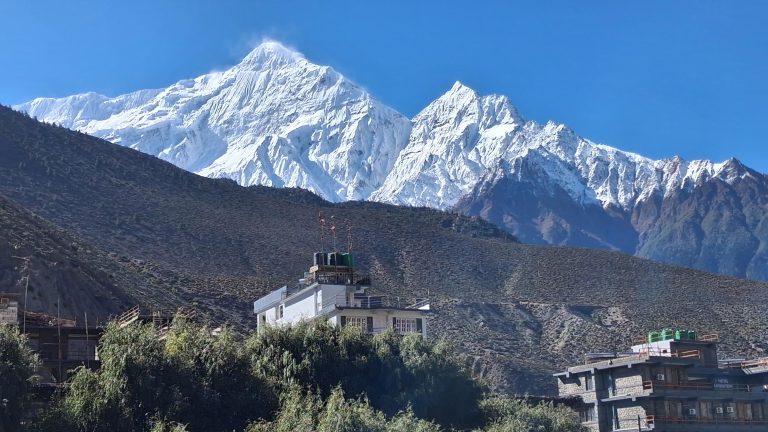
In Mustang’s Thasang Rural Municipality, over 27 households rear approximately 1,500 yaks and chauris. During the summer months, local farmers set up migratory sheds in high-altitude pastures, patans, and grazing lands near Marche Lake at the foot of Mount Nilgiri, Dhaulagiri Icefall, and Batase Lake. With winter now setting in, the process of driving the herds down near settlements has begun.
In Thasang-1, Lete/Tukuche, three households have brought down about 250 yaks. In various villages of Thasang-2—including Soru, Sirkhum, Nakum, Kowang, Larjung, Naurikot, Gatte Khola, Chhaktang, and Naurikot—around 20 households are rearing over 1,000 yaks. Similarly, two households in Thasang-4, Jhipra Deurali, manage over 80 yaks, while two households in Thasang-5, Taklung, have adopted yak-rearing with over 130 animals, General Secretary Hirachan stated.
Highlighting the wider regional scale, Hirachan mentioned that across all five local levels of the Himalayan district of Mustang, more than 5,000 yaks are commercially raised in over 67 sheds.
Aside from Thasang, roughly 700 yaks are raised in Gharpajhong Rural Municipality—comprising three sheds in Jomsom (Ward 4), two in Syang (Ward 3), and two in Marpha (Ward 2). Baragung Muktichhetra houses over 300 yaks, while Lomanthang Rural Municipality maintains a population of more than 1,500 yaks. Additionally, two households in Loghekar Damodarkunda Rural Municipality are raising approximately 400 yaks, he added.
Yak and chauri farming has been practiced traditionally in the Himalayan district of Mustang for centuries. Although farmers have the potential to earn a satisfactory income from this profession, the enterprise is becoming increasingly risky and challenging.
Farmers in the Annapurna Conservation Area are deeply concerned over livestock losses caused by predators such as snow leopards, leopards, and wolves in the high-altitude pastures and grazing lands.
Dr. Lalmani Aryal, Chief of the Agriculture and Livestock Development Section, pointed out that climate change has led to reduced grass growth in Mustang’s high pastures, while the proliferation of invasive weeds is shrinking traditional grazing zones. Chief Dr. Aryal added that untimely rainfall, drying drinking water sources, and high risks of avalanches are making traditional yak farming increasingly precarious.
Despite these growing challenges, the number of livestock farmers has started to rebound thanks to government subsidies and promotional programs. Farmers have been encouraged by financial support from the Agriculture and Livestock Development Section and local municipal livestock units for purchasing yaks, building infrastructure, managing feed, and receiving technical assistance.
Pemma Gurung, a yak herder from Gharpajhong, shared that providing farmers with up to 80% insurance subsidies for their livestock has offered tremendous relief. Farmers are reaping profits by processing milk, curd, ghee, and chhurpi (yak cheese).
Adult yaks are eventually sold for meat, while their tails command high prices in the market. Annually in the months of Sawan and Baisakh, fresh blood is extracted and sold from yaks in Thasang and Gharpajhong rural municipalities, allowing farmers to generate a secondary source of income.
Reared in the pristine, chilly climate of the Himalayas, yak meat is considered exceptionally tender and health-beneficial. Due to the animals grazing on wild medicinal herbs in the high-altitude pastures, it is a popular belief that consuming yak meat promotes good health. In Mustang, a fully grown adult yak is valued at around NPR 150,000.
RSS