
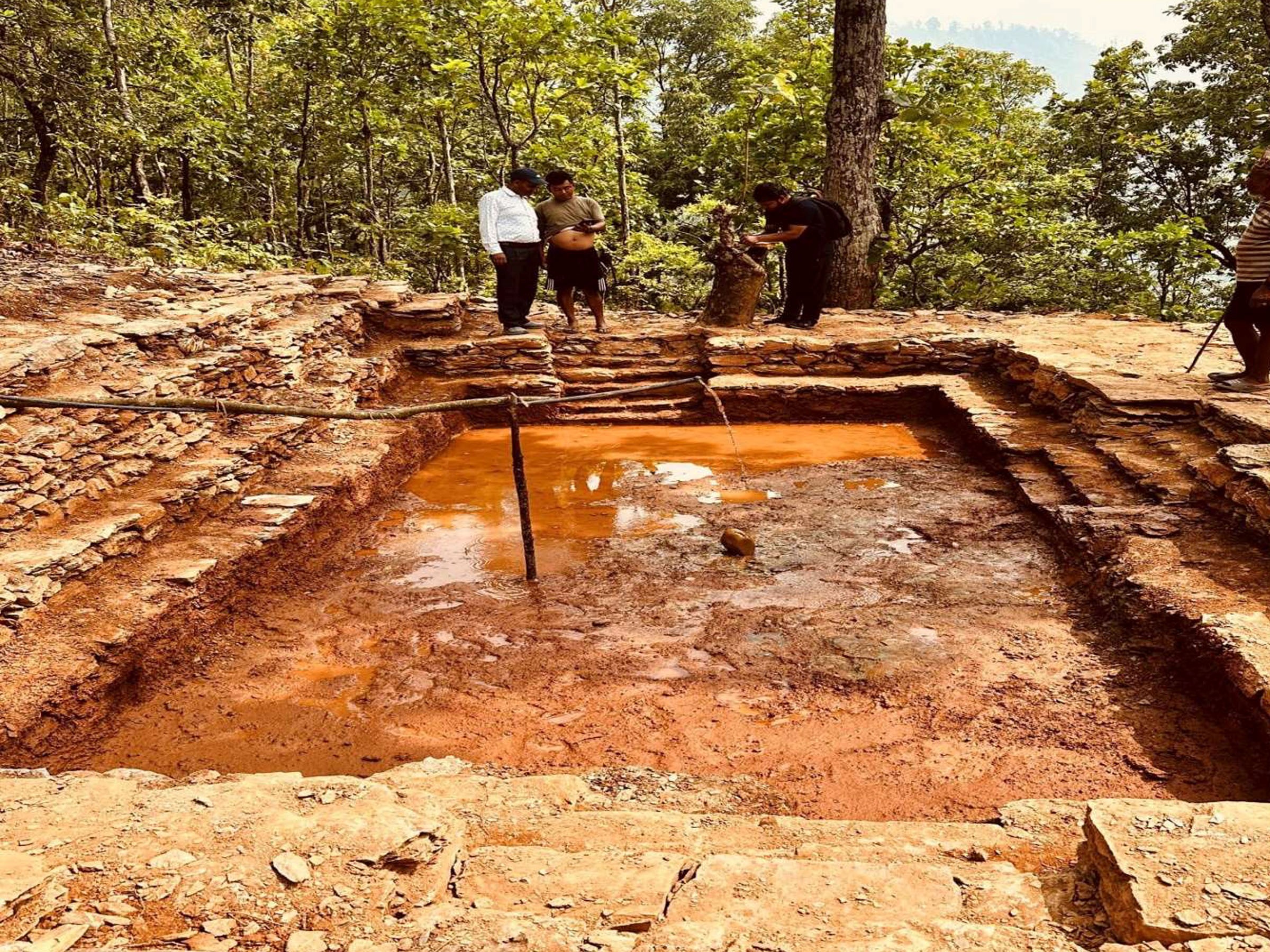
मानव वन्यजन्तु द्वन्द्व व्यवस्थापनका लागि पोखरी
Damauli (Tanahun), September 29
Ponds have been constructed in various community forests across Tanahun district to manage and reduce human-wildlife conflict. The Division Forest Office constructed these ponds in eight community forests during the fiscal year 2025/26 to ensure a reliable source of drinking water for wild animals.
According to Manoj Ranabhat, Chief of the Division Forest Office, Tanahun, the initiative was launched after wild animals searching for water began entering human settlements and attacking locals. Ranabhat explained that the shortage of water sources deep within the forest is a primary driver behind the rising terror of leopards in several parts of the district, often leading to attacks on humans and livestock.
The ponds have been built in the following locations:
- Jwaladevi Community Forest (Rishing Rural Municipality-6)
- Sapankot Community Forest (Byas Municipality-6)
- Malagiri Community Forest (Shuklagandaki Municipality-10)
- Kawachit Community Forest (Bhanu Municipality-10)
- Parche Community Forest (Bandipur Rural Municipality-2)
- Siddhabaraha Community Forest (Byas Municipality-11)
- Shera Community Forest (Bhimad Municipality-2)
- Umachok (Myagde Rural Municipality-2)
“Tanahun has experienced severe leopard terror for the past few years. As natural water sources inside the forest dried up, leopards started wandering into human settlements in search of water,” Ranabhat stated. “Addressing this issue, we have continued the drive to build ponds inside community forests.”
The Forest Office provides financial assistance of NRs 100,000 to each respective Community Forest User Committee for the construction of a pond. Inspired by this initiative, several local governments have also proactively begun constructing ponds on their own.
The Forest Office believes that ensuring an adequate water supply within forest areas will eliminate the need for wildlife to venture into human habitats. Officials noted that providing wildlife—such as leopards, deer, monkeys, and wild boars—with access to water inside the forest will significantly reduce direct encounters and conflict between humans and wildlife.
— National News Agency (RSS)