
मुपात्र र याँमता (राक्षस) जात्रा
BHAKTAPUR, September 28.
The traditional Mupatra Jatra (also known as the Demon Festival), which holds significant historical and religious importance, has officially commenced in Bhaktapur. Based on the mythological tale of Lord Indra’s son, Jayanta, who was captured and bound by demons while gathering Parijat flowers from the mortal realm for his mother Vasundhara’s Chaturmasa fast—and subsequently rescued by Indra—this festival has been observed since the reign of Malla King Jagat Prakash Malla through dramatic enactment.
According to historian and culture expert Dr. Purushottam Lochan Shrestha, the festival takes place over three days, from the second to the fourth day of the dark fortnight in the month of Ashwin (Ashwin Krishna Dwitiya to Chaturthi). Because the main attraction is the Mupatra (demon), locals often refer to it as the “Demon Festival.”
Key Rituals and Traditions:
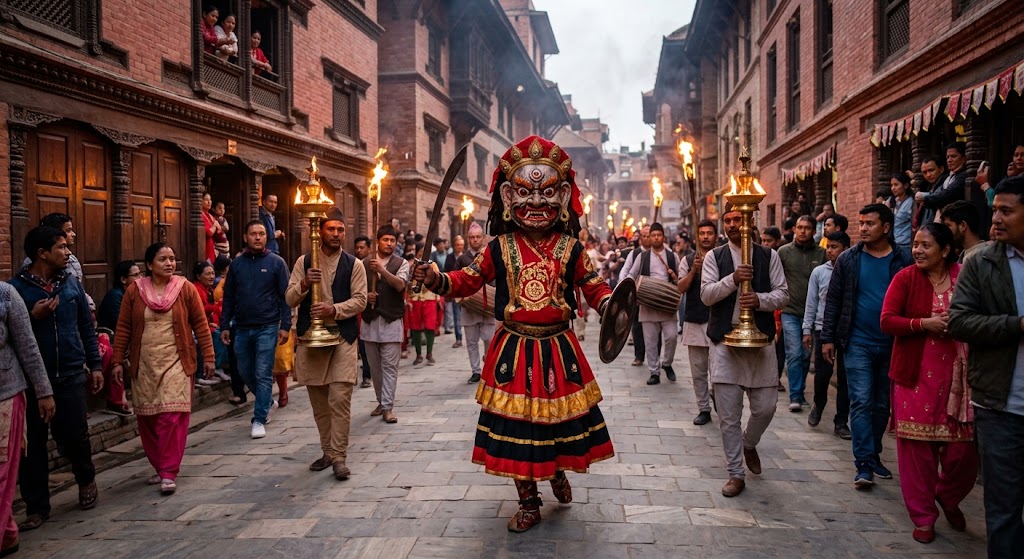
- The Mupatra and Demon Enactment: The festival features three individuals dressed as demons—one primary character known as the ‘Mupatra’ and two assistants called ‘Dhicha.’ Attired in demon costumes with vibrant facial makeup and holding swords, they are led in a procession throughout the town of Bhaktapur. At various intersections, the Mupatra circles the erected Yamandya deity three times and acts out striking it with a sword, symbolizing the severing of the ropes that bound Jayanta.
- Day One: Members of the Manandhar community from Sakulan Tole light two Yamata (sky lamps shaped like tridents) in front of the Bhimsen Temple in Dattatreya. Following this, the idol of Sanla Ganesh from Tachapal is placed on a palanquin (khat) and carried through the town.
- Day Two: The Manandhar community of Golmadhi lights the Yamata. The idol of Chhuma Ganesh from Chochhen Tole is brought to Durbar Square to offer homage to Taleju Bhawani, followed by a procession accompanied by traditional music. That night, both Ganesh idols are returned to their respective Dyo:chhen (god houses).
- Final Day (Ashwin Krishna Chaturthi): Following an official worship ceremony organized by the Guthi Sansthan at Akash Bhairav in Taumadhi, the Manandhar community of the lower town lights two Yamata in front of the stone spout at Bulucha. They then lead a procession featuring Mashan Bhairav, another manifestation of Kashi Jaganath Bhairavnath.
Pulukisi Jatra and Religious Beliefs:
On the final day, the Pulukisi Jatra (representing Lord Indra’s white elephant, Airavata) departs from Lakulachhen Tole to the beats of Nayakhing drums. After circumambulating and offering prayers three times at the Bhairavnath Temple in Taumadhi, the Pulukisi completes half of its town procession before the Mupatra Jatra is allowed to begin.
According to folklore, if the Pulukisi accidentally tramples and kills the Mupatra during the festival, it is believed to carry no religious fault or sin (Khatwat). To prevent any tragic encounter, the processions are carefully coordinated so the two never cross paths.
Social Tradition:
Historically, playing the role of the Mupatra meant enduring social ostracization and loss of caste status. Because of this tradition, the Guthi Sansthan typically hires individuals from outside the local community to portray the Mupatra rather than local residents.